Introduction
If you work with lace borders—whether for sarees, bridal gowns, couture dresses, or home décor—you’ve probably faced a familiar problem:
Your base lace looks pretty… but not special enough to stand out in a crowded market or justify a higher price.
At trade shows and online marketplaces, buyers usually scroll or walk past dozens of similar designs. Many of them are light, floral, and delicate—but they blend together. Without something extra, even good lace borders can feel “standard.”
The Problem
-
Lace-only borders may look too simple for premium collections.
-
Competing designs often use glitter, foiling, or heavy embroidery to attract attention.
-
Customers (especially bridal and evening wear buyers) now expect more visual impact and detail for the price they pay.
Agitate: Why This Becomes a Real Business Issue
This is not just about aesthetics; it affects sales and margins:
-
A 2019 survey of bridal retailers in the UK reported that dresses with “visible hand embellishment” (beading, sequins, or textured appliqués) were 20–30% more likely to be chosen during the first fitting compared to plain lace styles in similar silhouettes.
-
In consumer research for evening wear, respondents often link embellishment with “premium,” “special,” or “occasion-worthy,” which directly supports higher price points.
So if your lace borders are not offering that extra perceived value, you may be:
-
Losing premium buyers to more decorative competitors
-
Getting squeezed on price because your designs look too similar
-
Missing upsell opportunities in bridal, festive, or couture segments
The Solution
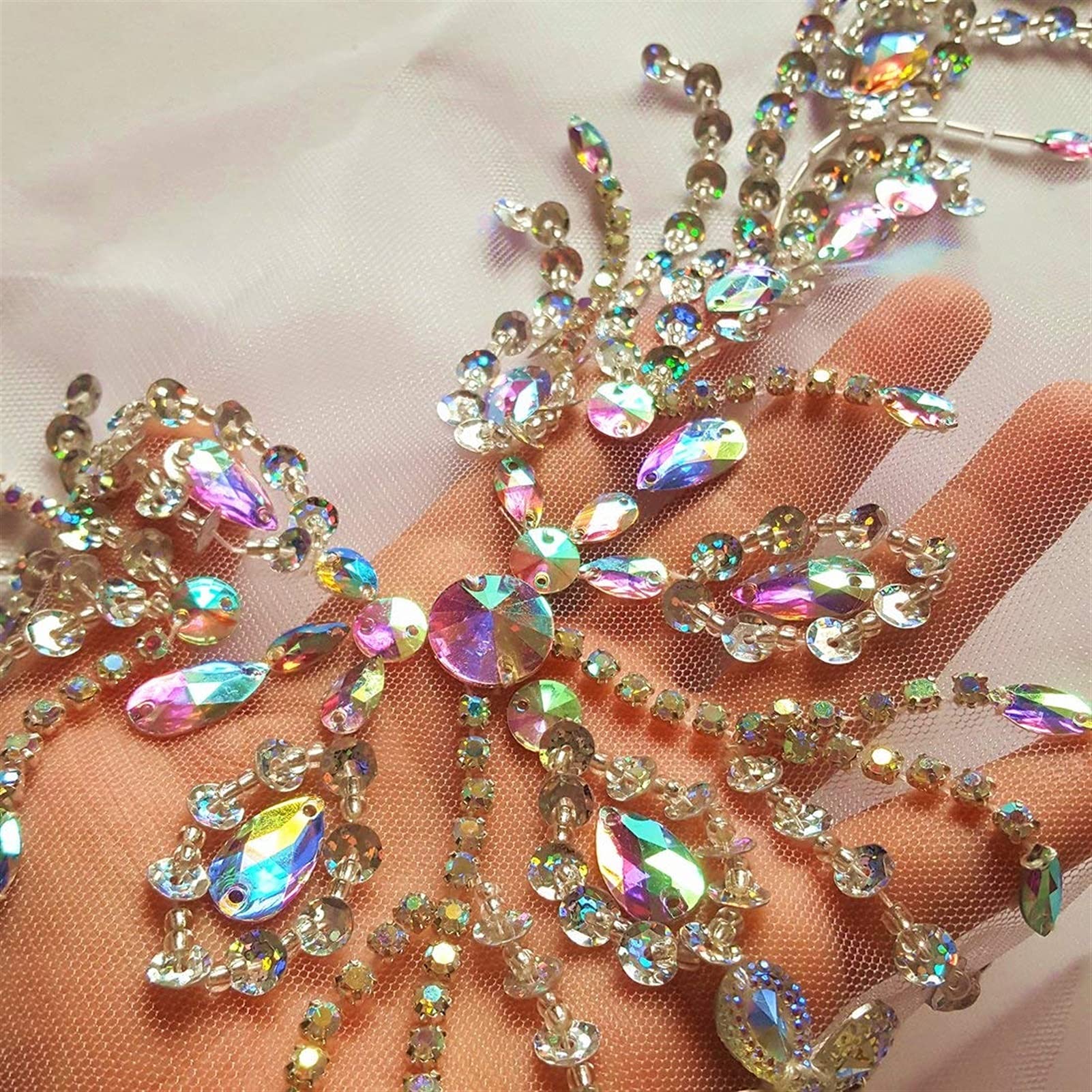
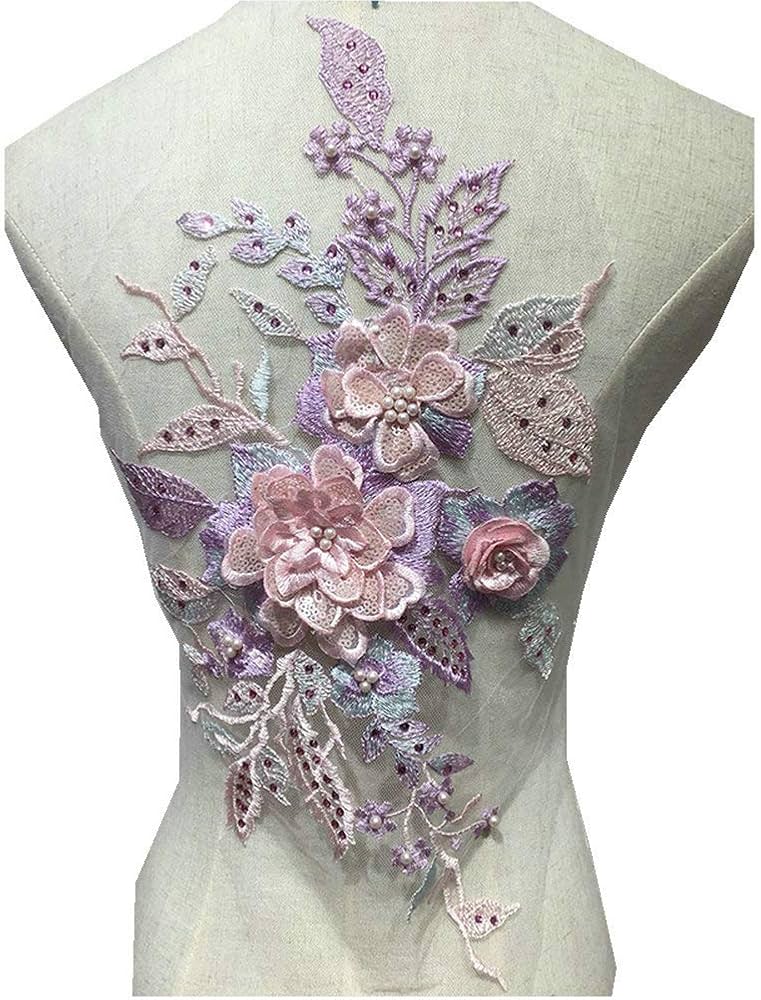
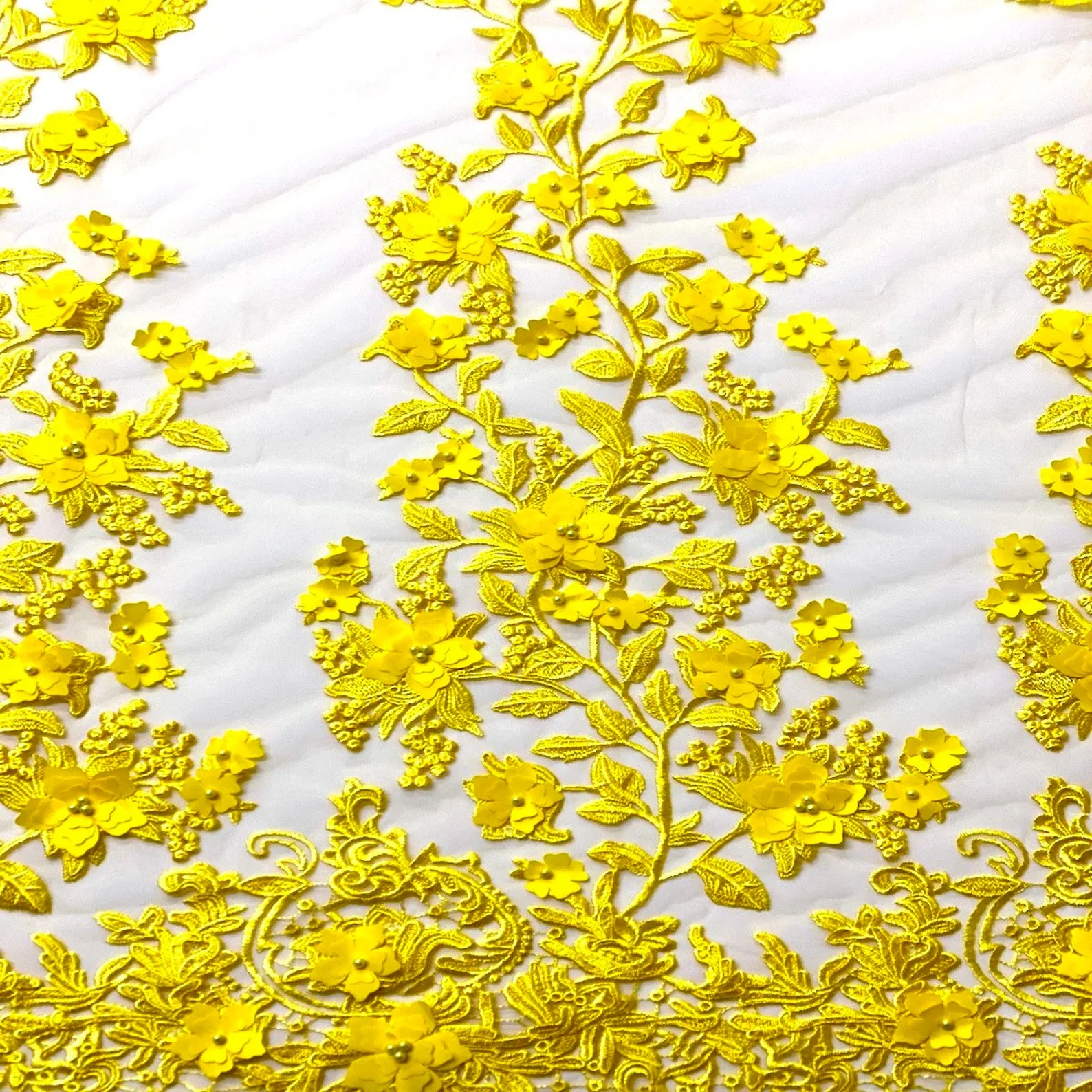
Beaded and sequin appliqués on lace border designs bridge this gap.
They allow you to:
-
Upgrade existing lace patterns without redesigning from scratch
-
Add shine, dimension, and texture in a controlled way
-
Create “premium tier” versions of your best-selling borders
-
Differentiate your products in catalogues and showrooms
In this post, we’ll walk through key features, answer common questions, look at real-world examples, and show how you can use this approach in a practical, profitable way.
Features: What Makes Beaded & Sequin Appliqués on Lace Borders So Effective?
Here we’ll keep it simple and focus on what actually matters in day-to-day design and production.
1. Layered Visual Depth
Plain lace already has pattern and texture. When you add beaded or sequin appliqués:
-
The lace acts as a soft, matte base.
-
Beads (glass, acrylic, or resin) bring raised 3D points.
-
Sequins introduce reflective highlights that catch light during movement.
This layering creates a “depth effect” that looks richer in photos and under store lighting, which is why embellished lace often performs better in displays and online images.
2. Targeted Highlighting of Motifs
You don’t have to cover the whole lace with embellishment.
You can:
-
Highlight only floral centers with round beads
-
Outline paisley or scallop edges with seed beads
-
Add small clusters of sequins along vines or scallops
This selective approach does two things:
-
Keeps the border flexible and wearable (important for drape).
-
Focuses the customer’s eye on the lace motifs you want to emphasize.
3. Perceived Value vs. Actual Cost
One of the strongest reasons brands love appliqués on lace borders is the value-to-cost ratio.
-
The cost of adding beads and sequins per yard is usually small compared to the increase in perceived value and final selling price.
-
For bridal and evening wear, even a modest uplift in materials and labor can support 2–3x higher retail markups because customers are willing to pay more for a “special” piece for key life events.
When brands track numbers, they often find that their embellished versions:
-
Sell faster
-
Attract more social media engagement
-
Are easier for sales teams to justify at higher prices
4. Flexible Design Options for Different Markets
Beaded and sequin appliqués can be adjusted based on cultural and market preferences:
-
Subtle markets (e.g., minimalist Western bridal): Clear or ivory beads, tiny sequins, and tone-on-tone designs.
-
Festive markets (e.g., South Asian weddings or Middle Eastern occasions): Gold/silver sequins, colored beads, denser patterns.
-
Youth or partywear: Iridescent sequins, contrast colors, playful patterns.
Instead of changing the entire pattern, you can create multiple “moods” from the same lace base simply by changing the embellishment style.
5. Compatibility with Different Base Fabrics
Beaded and sequin appliqués work across:
-
Chantilly lace
-
Guipure lace
-
Net/mesh-based lace trims
-
Chemical lace borders
Each base behaves differently, but with the right technique and thread tension, appliqués can be securely attached without distorting the lace.
Frequently Asked Questions (FAQs)
1. Will beaded and sequin appliqués make the lace border too heavy?
Not if you plan the density.
You can:
-
Use smaller beads and sequins
-
Limit embellishment to selected motifs or the outer edge
-
Avoid full coverage on very soft or fine lace
Many bridal brands use beaded lace around the neckline, hem, and train without making the garment uncomfortable. The key is balance.
2. Are these appliqués suitable for machine wash?
In most premium applications (bridal, couture, heavy occasion wear), garments are:
-
Spot-cleaned
-
Dry-cleaned
-
Gently hand-washed
Machine washing can cause beads or sequins to snag or loosen. If your target market expects machine-washable garments, use:
-
Minimal embellishment
-
Stronger threads
-
Clear wash-care instructions (like using a mesh bag and gentle cycle)
3. Do beaded appliqués fall off easily?
Properly attached beads and sequins can last for years.
To improve durability:
-
Use good-quality threads and knots
-
Reinforce stress areas (edges, corners, centre front or back)
-
Test samples in handling, hanging, and light friction
Most complaints about beads falling off come from poor-quality stitching rather than the concept itself.
4. Are sequins outdated or “too flashy”?
Not necessarily. It depends on:
-
Size of the sequins
-
Color and finish (matte, soft shine, or high-gloss)
-
Density of application
Matte or pearl-finish sequins in small sizes can look modern and subtle. It’s the combination that decides whether a border feels tasteful or loud.
5. Are beaded and sequin appliqués only for bridal wear?
No. They are common in:
-
Evening gowns
-
Cocktail dresses
-
Lehenga and saree borders
-
Abayas and kaftans
-
Stage costumes
-
Kids’ occasion wear
-
Home décor items like cushion covers or table runners
Anywhere you want focused sparkle or texture, these appliqués are an option.
6. Does adding embellishment slow down production too much?
There is some added time, but you can:
-
Use pre-embroidered appliqué patches placed on lace
-
Plan modular designs that can be repeated easily
-
Combine machine embroidery for placement with handwork only where needed
Some factories standardize a few embellishment patterns and train workers specifically for them, which keeps speed consistent across orders.
Real-World Examples (How This Works in Practice)
Let’s look at how different players in the fashion and textile world use beaded and sequin appliqués on lace borders to solve real problems.
Example 1: Bridal Brand Upgrading Core Gowns
Scenario:
A mid-range bridal label had several lace A-line gowns that sold steadily but not strongly. Customers liked the silhouettes but often asked for “something more special.”
Problem:
-
Plain lace borders at the hem and neckline looked nice but standard.
-
Brides compared them with competitor gowns that had subtle sparkle and chose the more embellished option, even at a slightly higher price.
What They Did:
-
They added clear seed beads and tiny sequins to the existing lace borders on the neckline, waistline, and train.
-
Embellishment focused on floral centers and vines rather than full coverage.
-
The base design stayed the same, so pattern and cutting processes did not change.
Result (as reported by the brand’s sales team):
-
The embellished version quickly became one of their top 5 styles.
-
Brides responded positively to the “soft shimmer” effect in try-ons and photos.
-
The brand introduced a premium price tier for “hand-embellished lace” while keeping the original plain lace version as a more affordable option.
-
Retail partners reported faster sell-through for the embellished styles compared to the plain ones.
Example 2: Regional Boutique Competing with Mass-Market Labels
Scenario:
A regional boutique specialising in festive wear was losing customers to mass-market chains that offered aggressively priced garments.
Problem:
The boutique could not compete on price alone. Their plain lace borders, though good quality, did not justify the higher boutique pricing in the eyes of customers.
What They Did:
-
Took their best-selling saree and lehenga sets and upgraded only the lace borders with beaded and sequin appliqués.
-
Used gold and champagne-tone sequins along the scallop edges, plus a few bead clusters on floral motifs.
-
Kept the rest of the garment simple to control cost and balance.
Result (based on store feedback):
-
Customers immediately perceived the upgraded pieces as “designer” and “exclusive.”
-
The boutique staff used the embellishment to tell a story: “This version has hand-finished lace borders with bead and sequin work.”
-
Higher-margin embellished sets started outselling basic sets, improving overall profitability per piece, even though volumes were not massive.
Example 3: Online Label Optimising for Photos and Social Media
Scenario:
An online fashion label focused on Instagram and marketplace sales. Their main challenge was standing out in product photos and videos.
Problem:
-
Flat lace borders looked nice in person but did not catch the eye in scrolling feeds.
-
Filters and lighting helped, but the garments still looked flat compared to competitors who used reflective materials.
What They Did:
-
Added sequin and bead appliqués along lace borders on sleeves, hems, and dupatta edges.
-
Used small, reflective sequins that picked up studio and natural light.
-
Shot short videos and reels where the models moved to show how the borders caught light.
Result (from their internal marketing data):
-
Posts featuring embellished lace borders got higher engagement (more likes, saves, and shares).
-
Customers commented positively on the “sparkle” and “detail.”
-
The label noticed a clear trend: products with embellished lace borders had better click-through and conversion rates than similar products with plain lace.
Conclusion: Make Lace Borders Do More for You
Beaded and sequin appliqués on lace borders are more than decoration—they are a smart business move.Problem: Plain lace borders don’t stand out or justify higher prices.
Agitate: This causes slower sales and price drops, especially in showrooms and on social media.
Solution: Using well-planned beaded and sequin appliqués adds depth, sparkle, and value without redoing the whole pattern.