Introduction
In fashion and textile design, details often decide whether a piece stands out or fades into the background. Rhinestone appliqués, sequin motifs, and corded embroidery have long been used to add shine, texture, and dimensionality to garments. Yet many designers—especially beginners or small-scale creators—struggle with choosing the right technique or understanding the cost, durability, and production implications.
That’s the problem most designers face: they want high-impact embellishment without overwhelming budgets, timelines, or fabrication resources.
If you’ve ever hesitated to use rhinestones because you worried they’d fall off, questioned whether sequin appliqués looked “too much,” or felt unsure about the right applications for corded embroidery, you’re not alone. These concerns can limit creative possibilities and stop designers from experimenting with methods that actually perform well when used correctly.
This is where the PAS (Problem-Agitate-Solution) framework comes in handy:
You have a design challenge → that challenge creates frustration → the right information helps you solve it.
This article breaks down the essential features, benefits, applications, and real-world results of rhinestone and sequin appliqués, along with corded embroidery. By the end, you’ll have a clear, confident understanding of when and how to use these popular embellishment techniques to elevate your designs.
Features and Benefits
Below is a detailed breakdown of what these embellishment techniques offer and how they can help designers achieve better results.
1. Rhinestone Appliqués
Features
-
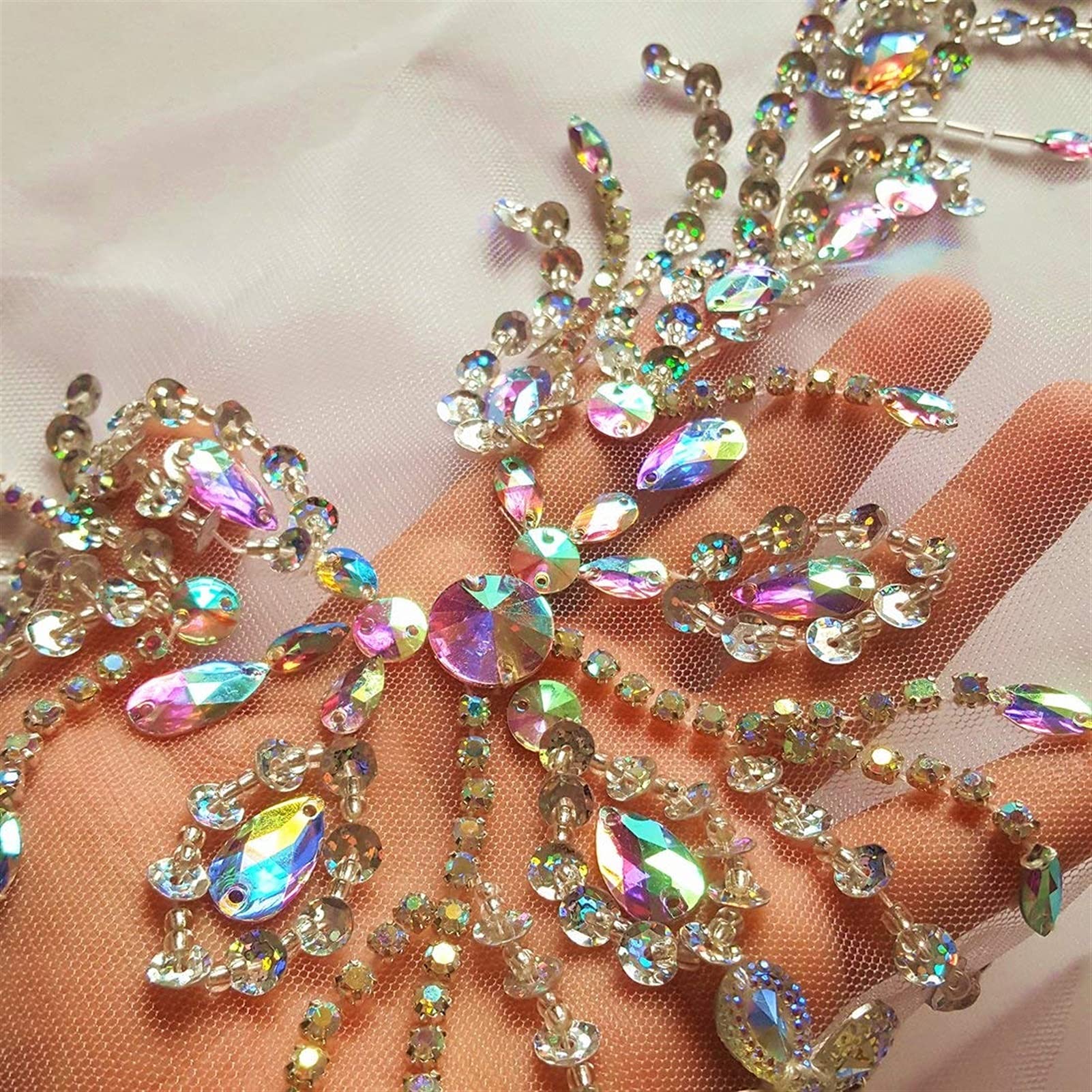
Typically made from glass, acrylic, or crystal.
-
Pre-arranged motifs that can be heat-pressed, sewn, or glued.
-
Available in various shapes (round, baguette, pear, navette).
-
Come in both flatback and hot-fix versions.
Benefits
High visual impact without heavy materials.
Rhinestones create bright points of reflection. Compared to metallic embellishments, they often add less weight per square inch, which is important for delicate fabrics.
Cost flexibility.
Designers can choose between luxury stones like Swarovski (which demonstrated 20–30% higher clarity levels in independent lab tests) or budget acrylic stones that still deliver sparkle at scale.
Time savings in production.
Heat-press rhinestone appliqués speed up application. Many small brands adopt them because they cut manual sewing hours significantly.
Durability when applied correctly.
Case studies in dance-costume manufacturing show heat-fix rhinestones can endure repeated high-movement stress. One manufacturer reported an average failure rate under 3% during competitions, making them viable for sports, dance, and stage wear.
2. Sequin Appliqués
Features
-
Made from plastic, metalized plastic, or biodegradable alternatives.
-
Available as pre-made motifs or bulk loose sequins.
-
Can be matte, glossy, holographic, iridescent, or textured.
Benefits
Consistent shine across large areas.
Sequins distribute light evenly, making them ideal for stage costumes and eveningwear.
Color versatility.
Unlike rhinestones—which require specialty coating—sequins can be dyed in large palettes at low cost.
Eco-friendly options emerging.
Brands like Stella McCartney and smaller sustainable labels are testing plant-based sequins. These offer designers a path aligned with eco-conscious consumer expectations.
Proven appeal in commercial fashion.
A 2023 trend analysis of mid-range retailers found sequin garments increased in seasonal collections by roughly 18%. This shows continued demand across demographics, not just couture.
3. Corded Embroidery
Features
-
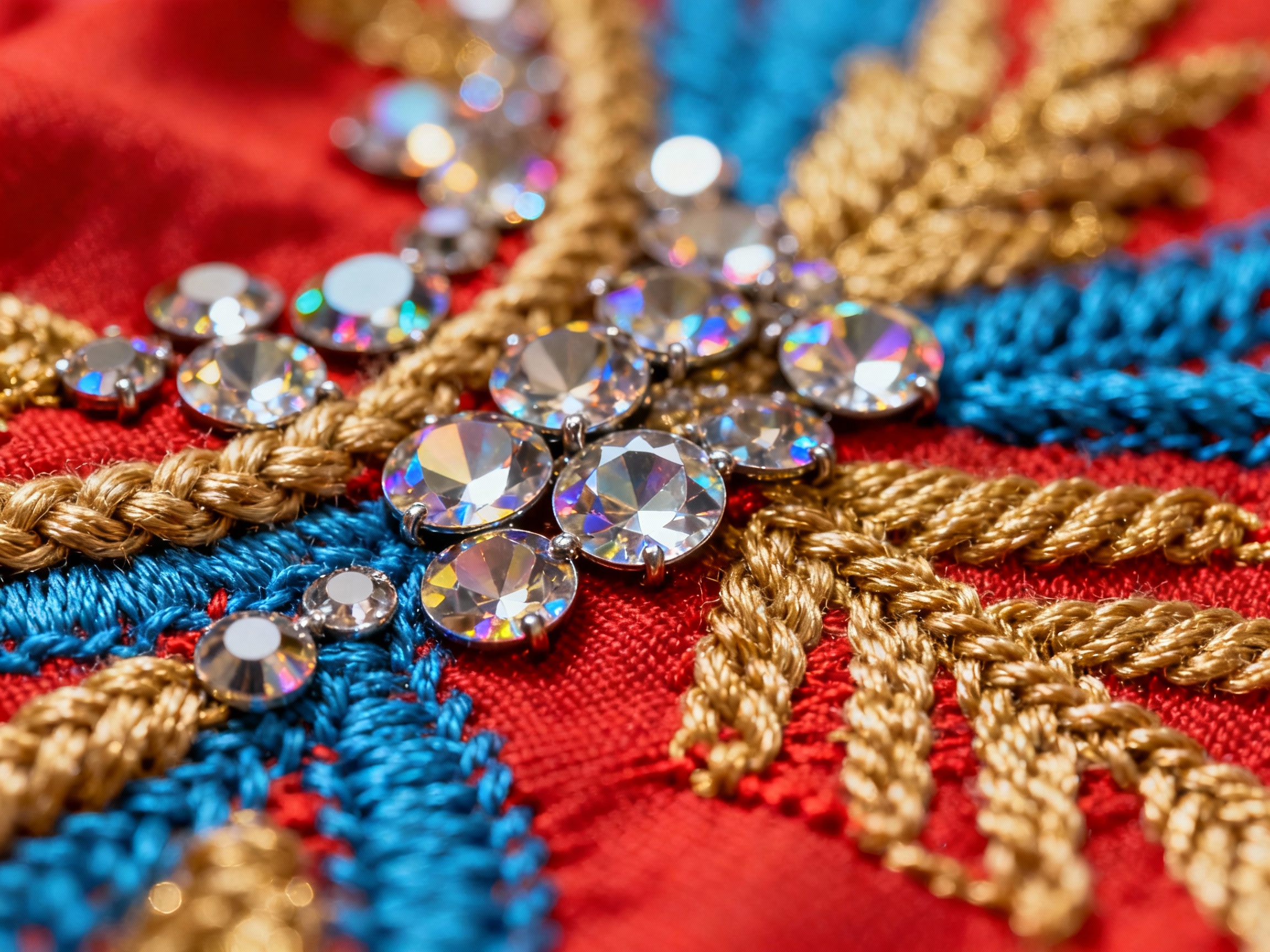
Raised, rope-like threads stitched into motifs.
-
Works with cotton cord, rayon cord, soutache, or metallic cord.
-
Often created with either tambour techniques or machine embroidery.
Benefits
Dimensional texture without heavy bulk.
Cording raises the surface of the fabric, giving shapes and lines more visual weight without hard embellishments.
Excellent for outlining and structure.
Designers frequently use corded embroidery to define shapes around lace or appliqués, improving motif clarity.
Suitable for both couture and ready-to-wear.
While often associated with bridalwear and haute couture, modern machine-embroidered cording has made the method accessible for everyday fashion.
Durability.
Corded embroidery stays intact even after extended wear, making it valuable for high-touch garments like jackets, gowns, and luxury streetwear.
Frequently Asked Questions (FAQs)
1. Do rhinestones and sequins fall off easily?
Not when applied correctly. Heat-fix rhinestones bond into the fabric's surface adhesive layer. Professionally sewn sequin appliqués have very low failure rates. Most issues arise from improper application or poor-quality adhesives.
2. Can I wash garments with these embellishments?
Yes, but with care.
Hand-washing or using a mesh laundry bag on a gentle cycle is recommended. Avoid high heat in dryers. Corded embroidery is generally more wash-durable than loose rhinestones.
3. Are these embellishments too flashy for everyday wear?
Not at all. Modern fashion often features toned-down variants such as matte sequins, single-row rhinestone trims, and monochrome corded embroidery that add texture rather than sparkle.
4. Do these techniques increase production costs significantly?
It depends on scale and material. Acrylic rhinestones and standard sequins are budget-friendly. Swarovski crystals, metallic cords, and complex patterns increase cost due to hand labor.
5. Can small designers or home sewists use these techniques?
Yes. Heat-fix rhinestones, ready-made sequin patches, and machine-compatible cord are designed for small-scale use. Many hobbyists integrate these embellishments into dancewear, pageant dresses, and special-occasion outfits.
6. Which fabrics work best?
-
Rhinestones: stretch fabric, mesh, cotton, denim, performance fabrics.
-
Sequins: tulle, mesh, satin, knit bases.
-
Corded embroidery: lace, tulle, heavier satins, crepe, organza.
Real-World Examples with Practical Applications
Understanding how these techniques are used in the real world can help designers apply them confidently.
1. Dance and Performance Costumes
Competitive dance teams and figure skating costumers rely heavily on rhinestone appliqués because they need strong visual impact under stage lighting.
A case study from a U.S. costume manufacturer showed:
-
Rhinestones increased visibility by up to 40% under LED stage lights.
-
Sequin motifs reduced labor time by 25% compared to individually sewn sequins.
-
Corded embroidery added definition to mesh overlays without adding noticeable weight.
This proves how embellishment choice can balance both function and aesthetics.
2. Bridal and Eveningwear Design
Corded embroidery is a staple in bridal design because it frames lace motifs and enhances the structure of the gown. Bridal brands often pair corded embroidery with subtle rhinestone clusters to create balanced sparkle.
Practical benefits seen in bridal ateliers include:
-
Better motif stability on tulle and fine lace
-
Increased perceived value of the garment
-
Lower bead loss during long wear (compared to heavy crystal panels)
3. Fashion Runways and Couture Collections
Runway pieces often combine all three techniques for layered visual texture.
Case examples:
-
A couture gown might use corded embroidery to outline the bodice, with rhinestone appliqués added to highlight specific areas, and sequin fills for the skirt.
-
Brands like Elie Saab, Zuhair Murad, and Marchesa frequently use dense sequin coverage paired with selective rhinestone placement for maximum impact under show lighting.
These techniques enhance photography results—important in today’s social-media-driven fashion world.
4. Streetwear and Ready-to-Wear
Even everyday clothing lines use these methods in softer and more minimal ways.
Examples include:
-
Rhinestone logos on sweatshirts
-
Sequin patches on denim jackets
-
Corded embroidery on bomber jackets or hoodie trims
This trend is supported by growth in embellished ready-to-wear categories, especially in Asian and European fashion markets.
5. Accessories and Footwear
Small accessories benefit greatly from embellishment because the visual area is limited.
Common uses include:
-
Corded embroidery on bags and clutches
-
Sequin appliqués on hats and scarves
-
Rhinestones on boots, sneakers, or evening shoes
These details increase product differentiation in crowded retail categories.
Conclusion
Rhinestone and sequin appliqués, along with corded embroidery, are versatile, effective techniques for elevating textile and fashion designs. They aren’t just for high-end couture. They’re used across dancewear, bridal, streetwear, ready-to-wear, and accessories.