Introduction
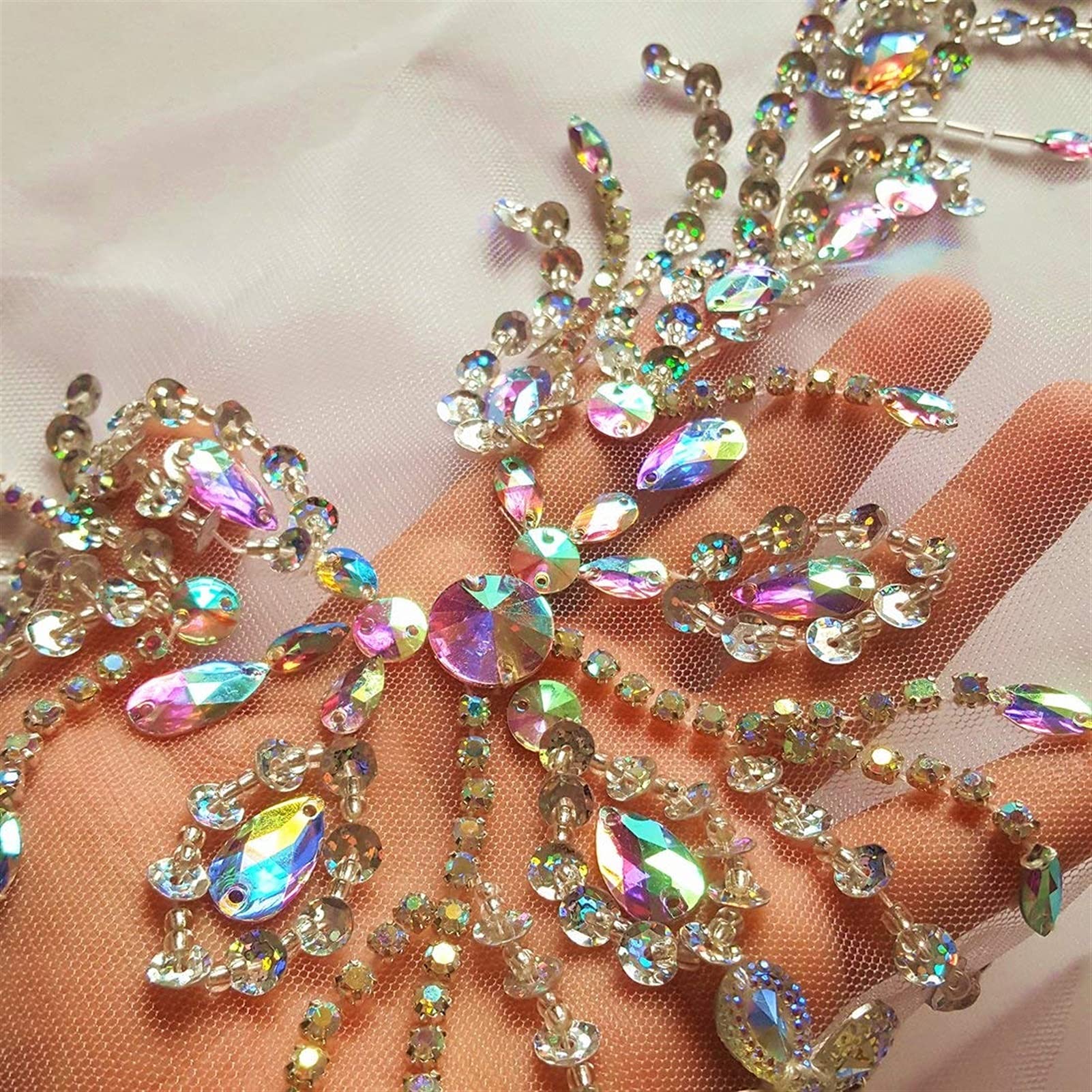
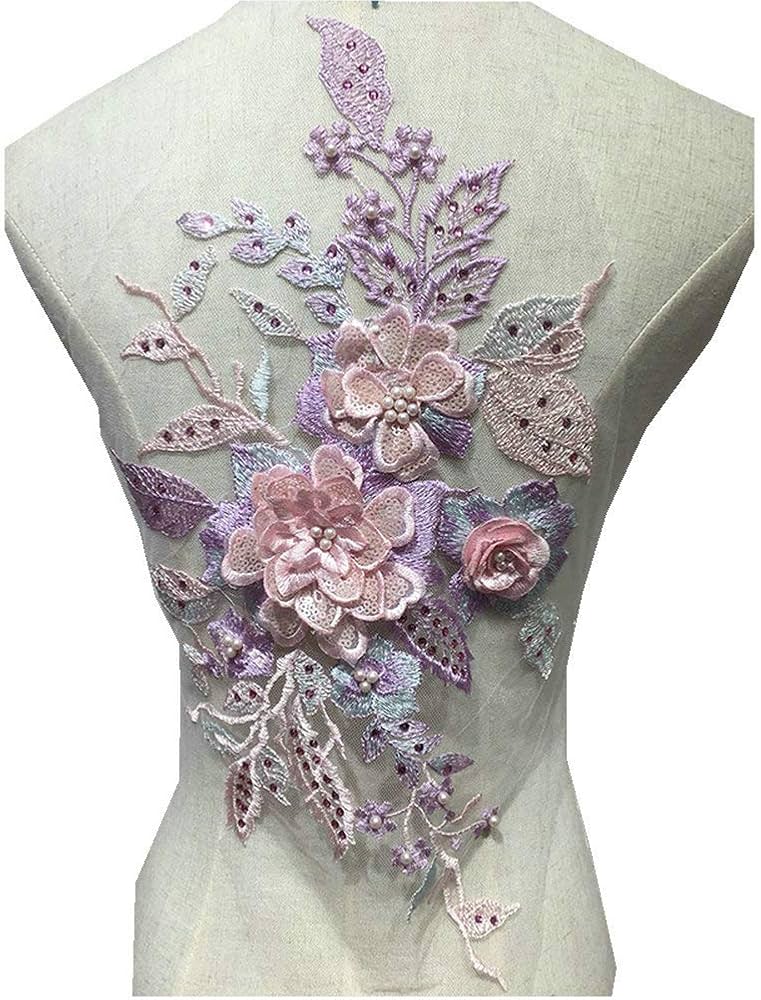
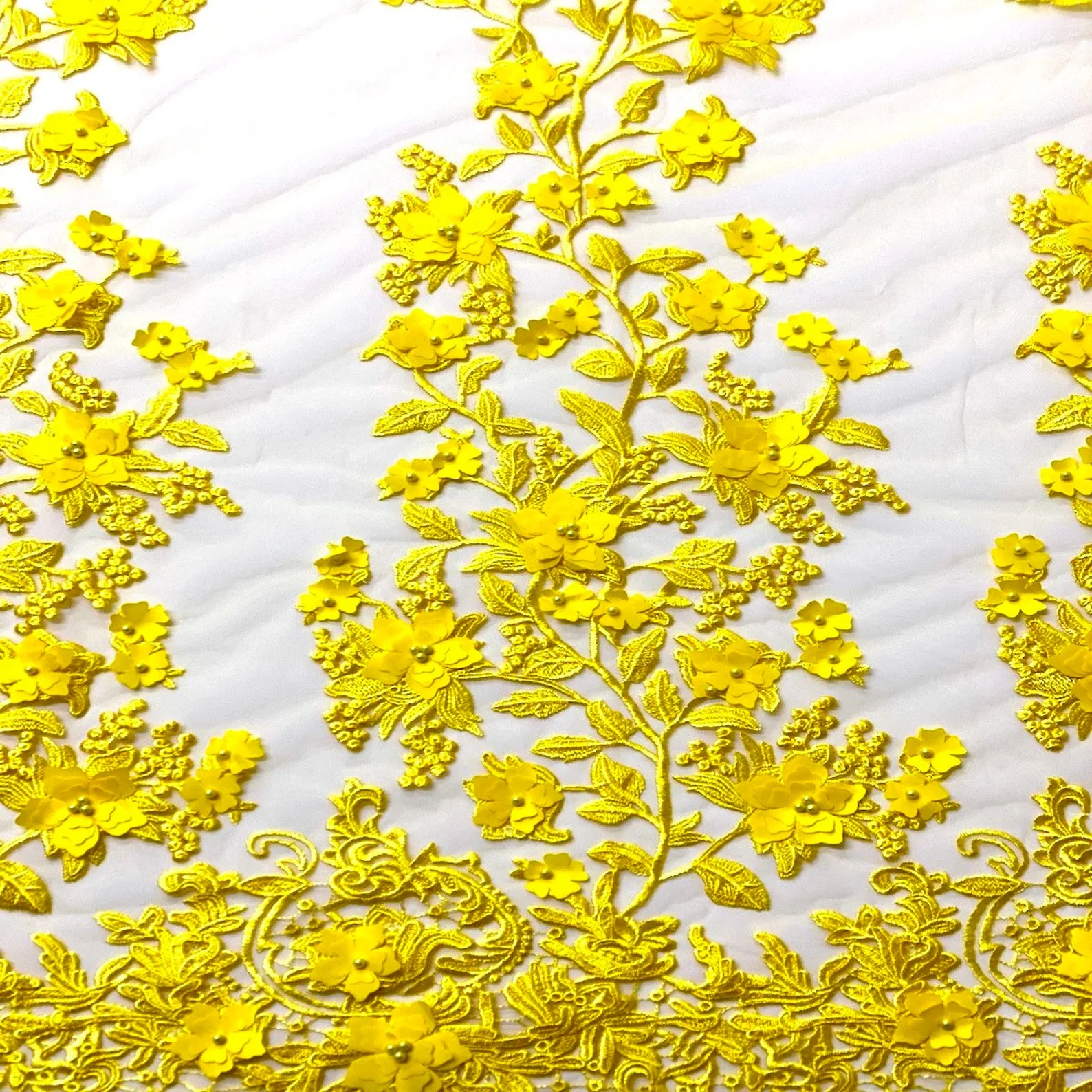
Walk through any fabric market or fashion trade show and you’ll see tables full of rhinestone appliques, sequin motifs, and rolls of floral lace. At first glance, they look decorative and simple. But for designers, manufacturers, and buyers, these materials raise real questions. Which appliques will last after production? Which lace holds its shape once stitched? And why do some finished garments look expensive while others look poorly made, even when the designs are similar?
The core problem is that decorative materials sit at the final stage of a garment. If something goes wrong, it shows immediately. Rhinestones that fall off, sequins that snag, or lace that tears can ruin the entire product.
These issues affect fashion brands, costume makers, bridal designers, and even small workshops. Understanding how rhinestone and sequin appliques work—and how floral lace materials behave—helps avoid costly mistakes. This article explains the challenges, the risks, and the practical ways to choose and use these materials correctly.
The Problem: Challenges in Sourcing and Applying Decorative Materials
Quality variation in appliques and lace
One of the biggest problems in the textile supply chain is inconsistent quality. Rhinestone and sequin appliques may look identical at first, but they often differ in:
-
Base fabric strength
-
Stitch density
-
Adhesive quality (for hot-fix items)
-
Stone material (glass vs plastic)
Floral lace faces similar problems. Lace patterns may look detailed, but poor thread quality or loose construction can cause tearing during cutting or sewing.
Application issues during production
Appliques are not stand-alone products. They must survive:
-
Cutting
-
Sewing or heat application
-
Washing or dry cleaning
-
Wearing and movement
If an applique is too stiff, it may pull on the fabric. If lace is too soft, it may stretch and distort the garment shape. These issues often appear only after production begins, when changes become expensive.
Agitate: What Happens When Decorative Materials Fail
Costly production losses
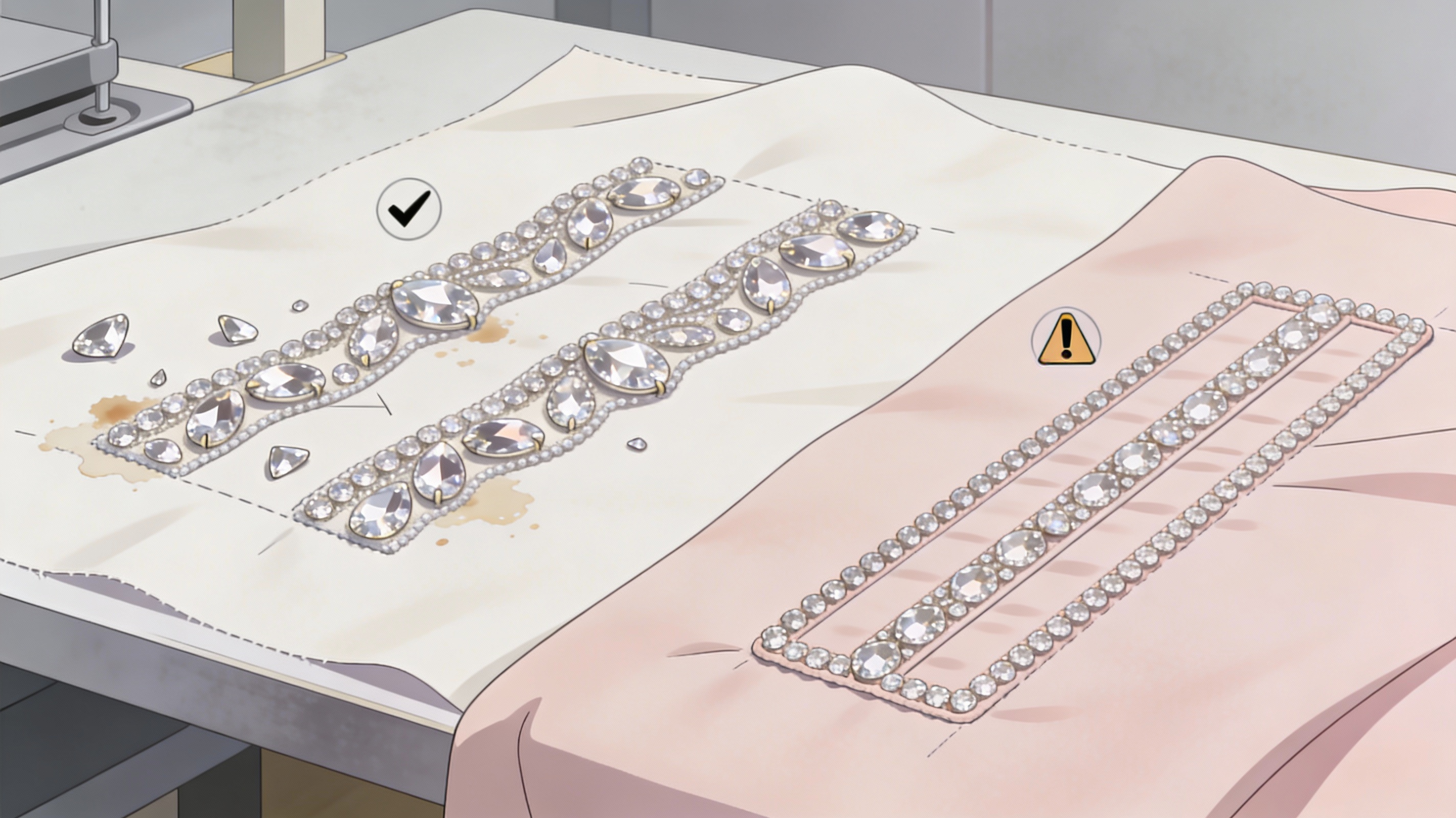
When rhinestones fall off during stitching or washing tests, finished garments may fail quality checks. This leads to rework or rejection. In large-scale manufacturing, even a small failure rate can cause significant losses.
Brand damage and customer complaints
Poor-quality appliques and lace show up fast in customer reviews. Sequins that scratch skin or lace that frays after one wear directly affect brand trust. Bridal and eveningwear brands are especially exposed, since customers expect durability even from delicate designs.
Design limitations and missed opportunities
Designers sometimes avoid appliques or lace because of bad past experiences. This limits creative options, not because the materials are flawed, but because they were chosen or applied incorrectly.
The Solution: Choosing the Right Rhinestone, Sequin Appliques, and Floral Lace
Understanding material construction
High-quality rhinestone and sequin appliques share a few basic traits:
-
Strong base fabric, usually mesh, organza, or lace
-
Secure stitching, often double-locked or reinforced
-
Balanced weight, so stones don’t pull on the garment
Floral lace materials should be evaluated by:
-
Thread strength
-
Pattern density
-
Edge stability
-
Stretch direction (if any)
These factors matter more than appearance alone.
Matching appliques to garment purpose
Not every applique suits every garment. For example:
-
Lightweight lace works better for overlays and sleeves
-
Heavier rhinestone appliques suit bodices or waist areas
-
Stretch lace should align with stretch fabrics
Matching materials to function reduces stress on seams and improves wear life.
Testing before full production
Many manufacturers now run simple tests:
-
Hand wash tests for stone loss
-
Heat tests for hot-fix appliques
-
Stretch tests for lace panels
These tests cost little but prevent large-scale issues later.
Features: Practical Attributes That Matter in Real Use
Rhinestone and Sequin Appliques
-
Durability: Stones remain attached under movement and cleaning
-
Design flexibility: Available in motifs, borders, and custom shapes
-
Application options: Sew-on, hot-fix, or adhesive-backed
-
Surface compatibility: Work on satin, mesh, lace, and knit bases
-
Repair potential: Individual stones can often be replaced
Floral Lace Materials
-
Breathability: Open structures improve comfort
-
Pattern consistency: Repeating motifs allow clean cutting
-
Layering ability: Works with linings and overlays
-
Edge usability: Scalloped edges reduce finishing work
-
Dye adaptability: Many laces accept custom colors
These features explain why lace and appliques remain common across fashion segments.
Real-World Example: Fashion and Manufacturing in Practice
Case 1: Eveningwear production line
A mid-size eveningwear manufacturer switched from glued rhinestone appliques to stitched sequin-and-rhinestone motifs. While the upfront cost increased, the return rate dropped due to fewer stone losses after cleaning. Over one season, production waste decreased, and customer feedback improved.
Case 2: Bridal lace selection
A bridal studio tested two floral lace materials with similar designs. One lace tore easily at seam points, while the other held shape due to tighter thread structure. The studio standardized the stronger lace, reducing alterations and last-minute repairs during fittings.
Case 3: Fast fashion adaptation
Some fast fashion brands use lighter sequins and synthetic lace for short lifecycle garments. While durability is lower, matching materials to expected garment lifespan keeps costs controlled and customer expectations aligned.
FAQs
1. Are rhinestone appliques better sewn or heat-applied?
Sewn appliques last longer, especially for garments that are washed or worn often.
2. Do sequins make garments uncomfortable?
Poor placement can cause discomfort. Proper lining solves most issues.
3. How do I test lace quality before buying?
Stretch it gently, pull at seams, and inspect thread density.
4. Can floral lace be machine washed?
Some can, but most require gentle cycles or hand washing.
5. Are glass rhinestones better than plastic?
Glass stones reflect light better and last longer, but cost more.
6. Can appliques be customized for brands?
Yes, many suppliers offer custom motifs, sizes, and layouts.
Conclusion: Practical Takeaways for Designers and Buyers
Rhinestone and sequin appliques, along with floral lace materials, play a major role in modern fashion. Problems usually don’t come from the materials themselves, but from poor selection, weak construction, or mismatched use. By focusing on structure, durability, and real-world testing, designers and manufacturers can avoid common failures.
For buyers, the key is to look beyond appearance. Check how appliques are built and how lace behaves under stress. When chosen correctly, these materials add value, flexibility, and long-term reliability to garments across fashion, bridal, and costume markets.