Introduction
Walk into any bridal shop, fashion studio, or costume workshop, and you’ll see lace everywhere. Whether it’s wedding dresses, party outfits, or stage costumes, floral lace and lace with sequins are always popular.
But there’s a problem many designers, shop owners, and buyers face:
Not all lace works the same. Some look great but break easily. Others shine online but feel heavy or uncomfortable when worn. Many people struggle to decide between plain floral lace, lace with sequins, or adding appliques—without knowing how each type performs in real life.
This confusion often leads to wrong choices, wasted money, unhappy customers, or dresses that look good only on display, not on people. Let’s fix that.
Why Choosing the Wrong Lace Hurts (Agitation)
Lace isn’t just decoration—it affects comfort, durability, cost, and how a garment looks in the end.
Here’s what happens when the wrong lace is picked:
Bridal gowns become too heavy to wear for long
Sequins fall off after one wash or event
Floral patterns lose shape after sewing
Dresses don’t fit right because lace stretches unevenly
Costume designers face last-minute repairs due to weak appliques
A 2019 study by The Wedding Report (USA) found that almost 28% of bridal alterations are due to fabric issues—most often lace weight, stiffness, or problems with embellishments. Indian and European fashion houses report similar feedback, where lace quality affects repeat orders.
In short, picking the wrong lace costs time, money, and trust.
The Smart Solution: Know Your Lace
The answer isn’t to avoid lace—it’s to understand it better. Let’s look at the main types, what they offer, and how professionals use them.
Features of Floral Lace Material
What Is Floral Lace?
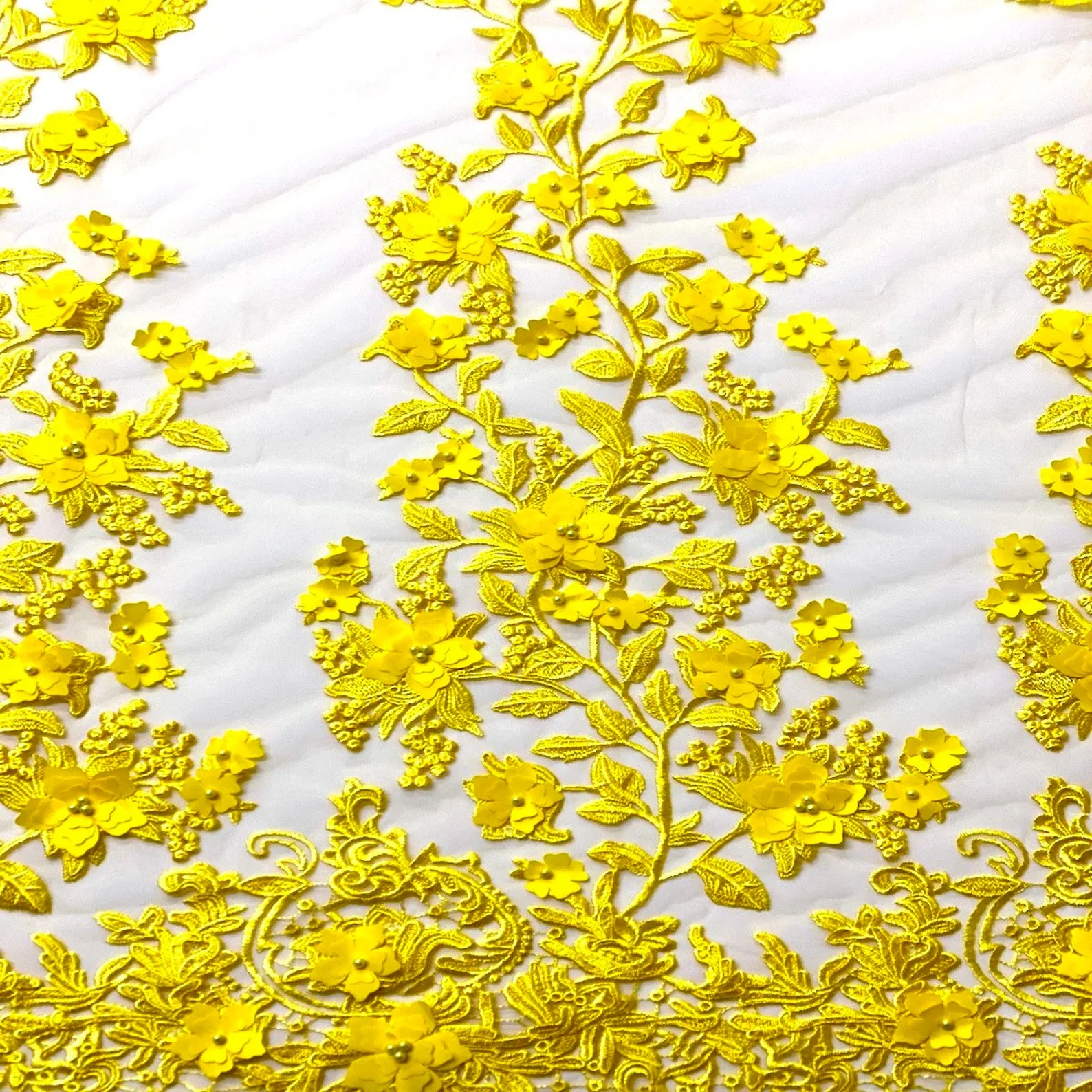
Floral lace is a fabric with flower patterns woven, embroidered, or knitted into a light, see-through base. The designs can be delicate vines, bold flowers, or repeating floral shapes.
Key Features
Lightweight and easy to wear
Comes in cotton, nylon, polyester, and silk blends
Can be stretchy or not
Often used as a top layer on garments
Why Designers Like It
Floral lace adds texture without adding bulk. It makes clothes look rich but keeps them comfortable.
Common Uses
Bridal veils and dresses
Saree borders and dupattas
Blouses and sleeves
Summer dresses and tops
Real Insight
A bridal studio in Mumbai switched from heavy embroidery to floral lace overlays. This reduced gown weight by 30–35%, making dresses more comfortable and cutting down on fitting complaints.
Features of Lace with Sequins
What Is Lace with Sequins?
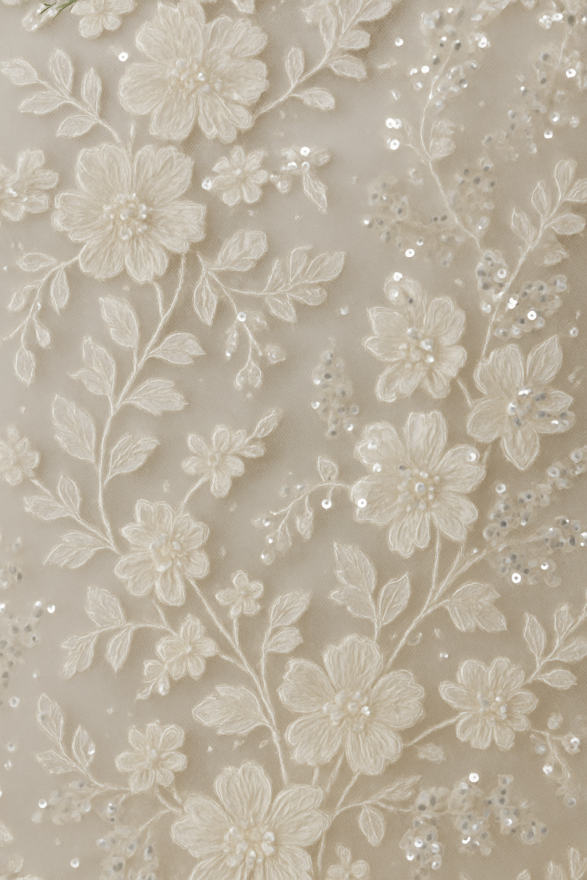
This is lace with sequins stitched directly into the pattern. The sequins catch light and add sparkle without covering the whole fabric.
Key Features
Adds shine in a controlled way
Sequins can be plastic, metal-coated, or glass
Can be matte or shiny
Available in matching or contrasting colors
Practical Benefits
Looks luxurious but costs less than full embroidery
Needs less work than hand-beaded fabrics
Great for evening and festive outfits
Common Uses
Bridal lehengas and gowns
Cocktail dresses
Stage and performance costumes
Festive ethnic wear
Case Study Insight
A UK costume rental company found that lace with sequins had a 22% higher booking rate than plain lace, especially for evening events and weddings.
Understanding Appliques: Rhinestone & Sequin Appliques
What Are Appliques?
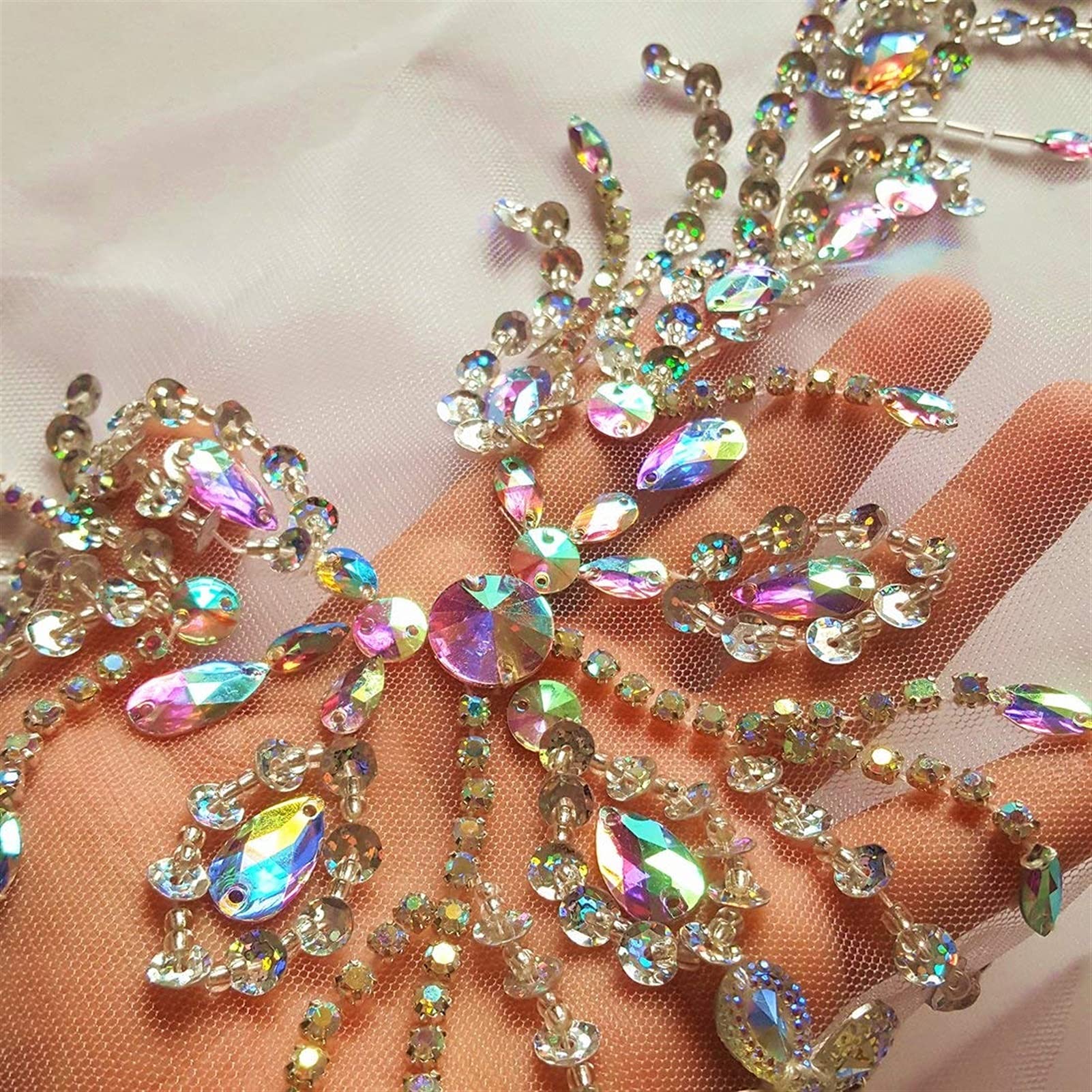
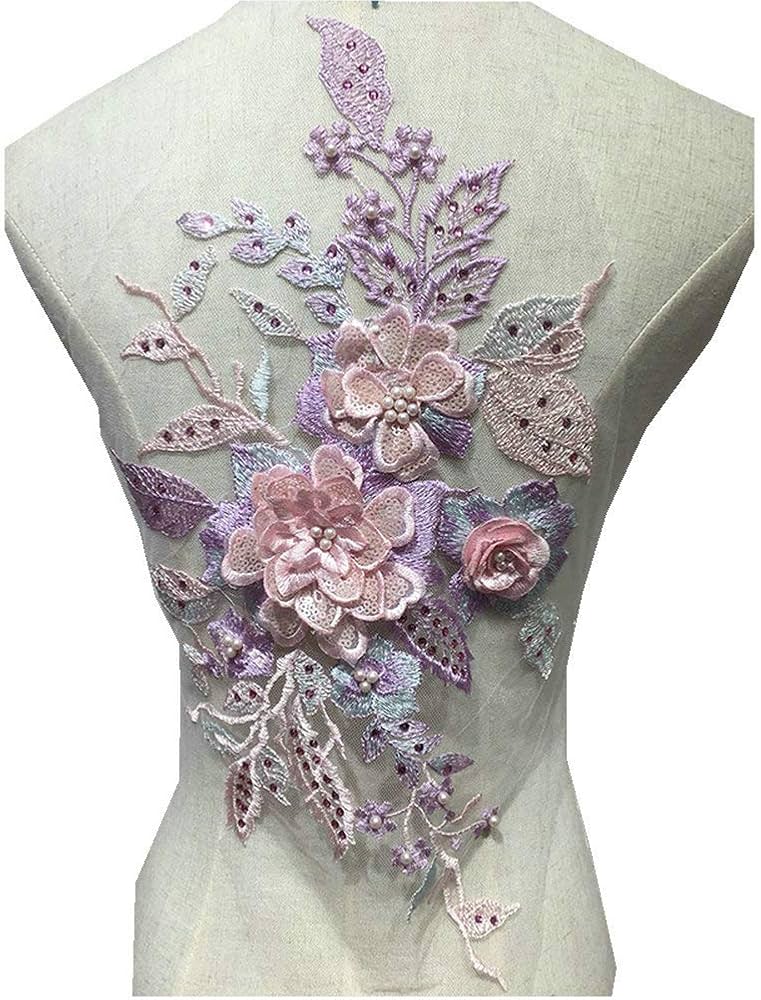
Appliques are decorative pieces stitched or glued onto fabric. They can be floral shapes, vines, borders, or other designs.
Rhinestone Appliques
Use crystal or glass stones
Shine brightly under light
Common in bridal tops and stage outfits
Sequin Appliques
Lighter than rhinestones
Flexible and easy to sew
Best for flowing clothes
Why Appliques Matter
Appliques let designers add sparkle exactly where they want. Instead of covering the whole garment, they can place it in key areas.
Real-World Example
A Delhi couture brand used rhinestone appliques only on necklines and waist areas instead of full embellishment. This cut fabric cost by 40% while keeping a premium look.
How Designers Mix Floral Lace, Sequins & Appliques
Most professionals don’t use just one type. They mix materials for better results.
Popular Combinations
Floral lace base with sequin highlights
Plain lace with rhinestone appliques on the bodice
Lace with sequins and a plain chiffon skirt
Why This Works
Keeps weight down
Reduces cost
Improves comfort
Makes movement easier
Fashion schools and ateliers teach this layered approach because it balances style with wearability.
Real-World Examples & Case Study Insights
Bridal Wear (India)
Indian bridal brands are using lace with sequins instead of heavy embroidery. According to FDCI (Fashion Design Council of India) trends, lightweight lace-based lehengas saw a 19% rise in demand from 2021–2023.
Western Bridal Fashion
European bridal designers at Barcelona Bridal Fashion Week reported that floral lace gowns with subtle sequins sold better than fully beaded gowns because they were more comfortable and modern.
Costume & Stage Wear
Stage performers prefer lace with sequins because it reflects light well on camera and allows free movement. Costume houses say maintenance costs are lower than with stone-heavy outfits.
FAQs About Floral Lace & Lace with Sequins
Is floral lace good for everyday wear?
Yes, especially cotton or stretch lace. Avoid heavy sequined lace for daily use.Does lace with sequins feel heavy?
Not always. Good lace uses light sequins and proper spacing to avoid stiffness.Are rhinestone appliques strong?
Quality appliques last if stitched well. Heat-glued ones may come loose over time.Can lace with sequins be washed?
Hand wash or dry clean is best. Machine washing may damage sequins.Is lace cheaper than embroidery?
Lace with sequins is often more cost-effective than full hand embroidery.Can appliques be reused?
Yes. Many designers remove and reuse appliques on new garments.
Conclusion
Floral lace and lace with sequins aren’t just decorative—they’re smart design tools. When picked right, they solve real problems: heavy clothes, high costs, and uncomfortable wear.
By understanding the features, uses, and real-world performance of lace and appliques, designers and buyers can create clothes that look great, feel comfortable, and last longer.
Whether you’re making bridal wear, festive outfits, or stage costumes, choosing the right lace can make all the difference. Pick wisely, layer smartly, and let your fabric work for you—not against you.