Introduction
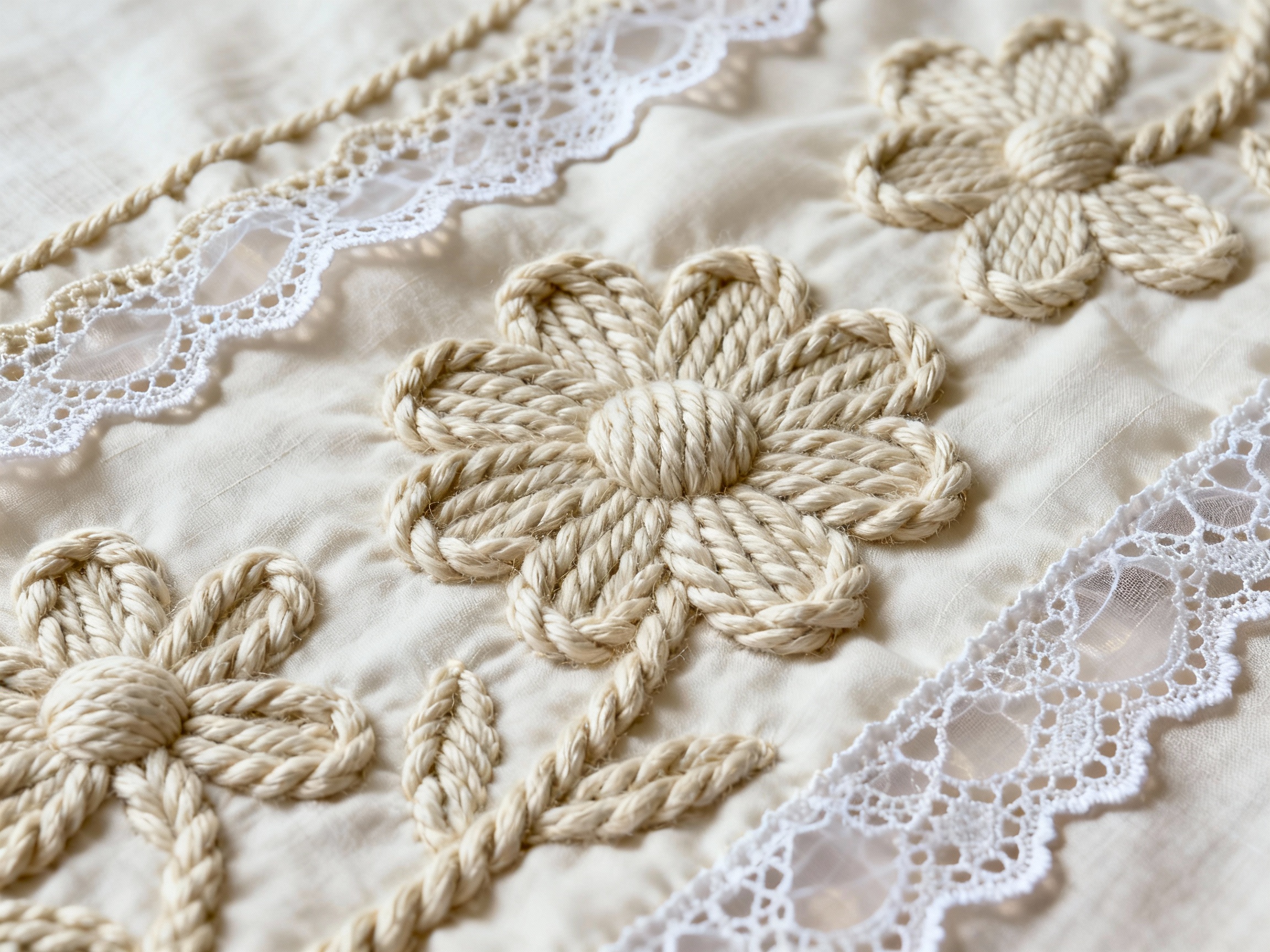
Corded embroidery and lace borders are two important techniques that play a significant role in textile design, especially in the fashion and home decor industries. Both add texture, depth, and intricacy to fabrics, making them more visually appealing. Corded embroidery involves stitching a cord-like material onto fabric, creating raised designs, while lace borders refer to delicate, open-worked trims often used to decorate the edges of garments or home textiles. These techniques are not just decorative; they also contribute to the overall aesthetic and functionality of the final product. Let’s take a closer look at what corded embroidery and lace borders are, their features, and how they are used in real-world applications.
Features of Corded Embroidery
Corded embroidery adds a three-dimensional texture to fabrics by using cords, often made from threads or wires, to create raised patterns. These patterns can be stitched directly onto the fabric or layered for a more elaborate effect. Common materials used for corded embroidery include cotton threads, silk cords, and synthetic fibers, depending on the desired finish.
Practical Benefits:
-
Durability: Corded embroidery is highly durable, which makes it ideal for garments that experience regular wear, such as jackets, uniforms, or upholstery.
-
Texture and Visual Appeal: This technique provides a distinct texture to the fabric, enhancing the visual appeal of clothing or home textiles. It’s often used in high-end fashion designs where texture plays an important role in creating unique and standout pieces.
-
Versatility: Corded embroidery can be used in a wide variety of applications, including fashion garments, accessories, and even interior design projects such as cushion covers and curtains.
Real-World Applications:
Manufacturers like Jean Paul Gaultier and Gucci have incorporated corded embroidery in their collections to add texture and drama. For instance, corded motifs on evening gowns or jackets create intricate, stand-out designs that give garments a luxurious and custom-made feel.
Features of Lace Borders
Lace borders, on the other hand, are thin, delicate trims made from threads interwoven to create intricate patterns. Traditionally made from materials like cotton or silk, modern lace can also include synthetic fibers, depending on the design’s purpose and cost considerations. Lace borders can be sewn onto the edges of garments, home textiles, and accessories to add decorative flair.
Practical Benefits:
-
Elegance and Delicacy: Lace borders are known for their delicate and intricate designs, which add elegance and sophistication to fabrics. This makes them popular for wedding dresses, lingerie, and bridal wear.
-
Customizable Designs: Lace can be made in various designs, from simple floral patterns to more complex geometric motifs. This allows designers to tailor lace borders to suit the style of the garment or product.
-
Breathability and Lightweight: Lace is a lightweight fabric, which makes it suitable for layering without adding unnecessary weight to the garment. This quality is especially useful in fashion for warm weather clothing.
Real-World Applications:
Lace borders have long been associated with bridal and formal wear, with designers such as Vera Wang and Oscar de la Renta using lace to enhance the visual appeal of wedding gowns. Lace borders also find a place in interior decor, such as on pillow covers, table linens, and curtains, where they add a refined, vintage touch.
Common FAQs on Corded Embroidery and Lace Borders
Q1: What materials are used in corded embroidery?
Corded embroidery is typically done with threads made from cotton, silk, or synthetic fibers. The cords can be thick or thin, depending on the desired effect. For example, thick silk cords are often used for bold, raised designs, while finer cotton cords may be used for more subtle detailing.
Q2: Is corded embroidery more durable than regular embroidery?
Yes, corded embroidery is generally more durable due to the added strength of the cords. The raised texture also helps protect the fabric underneath, making it ideal for high-wear applications like upholstery and outerwear.
Q3: How can I care for garments with lace borders?
Lace borders are delicate and may require special care, such as hand washing or dry cleaning, depending on the material. Cotton lace can usually be washed in cold water, while synthetic laces may be machine washable. Always check the care instructions before cleaning.
Q4: Can lace borders be applied to any fabric?
Yes, lace borders can be sewn onto almost any type of fabric, but they work especially well on lightweight materials such as silk, cotton, and chiffon. The contrast between the lace’s delicate nature and the sturdier fabric creates an appealing aesthetic.
Q5: Are lace borders suitable for all types of fashion or home decor?
While lace borders are often associated with more formal or vintage designs, they can be used in various settings, from casual garments to home decor. Modern designs feature lace in non-traditional ways, such as on denim or streetwear, adding a contemporary twist to the classic technique.
Real-World Examples of Corded Embroidery and Lace Borders
Corded Embroidery:
In the luxury fashion industry, corded embroidery is often used for creating detailed, raised patterns on formal eveningwear. Chanel, for example, has used corded embroidery to create elegant floral and geometric patterns on its haute couture collections. These intricate designs help elevate the garment’s overall appearance, making it more exclusive and visually stunning.
Lace Borders in Fashion:
One iconic use of lace borders is seen in Christian Dior’s Spring/Summer collections. The use of lace to trim the edges of dresses and skirts adds a vintage charm while retaining modern sensibilities. Lace borders can be seen adorning the hems of dresses, sleeves, and necklines, adding a delicate, feminine touch.
Lace in Home Decor:
Lace borders are also a favorite in home decor, particularly in vintage-inspired interiors. Anthropologie often features lace-edged pillows, curtains, and tablecloths in their collections, catering to customers looking for a soft, romantic feel in their living spaces. Lace adds texture and softness, making rooms feel warm and inviting.
Conclusion
Corded embroidery and lace borders are valuable techniques in the textile and fashion industries, offering versatility, durability, and a touch of elegance to a wide range of products. Whether you’re designing a couture gown or adding a delicate edge to a pillow, these techniques help elevate the overall aesthetic and function of fabrics. Understanding their practical applications, benefits, and care instructions can help you incorporate these timeless techniques into your designs or purchases. Explore corded embroidery and lace borders for your next creative project, and embrace the beauty of these intricate, yet durable, textile embellishments.