Introduction
When people think of fashion decoration, they often imagine hours of handwork, tiny details, and skilled finishing. That’s true—but it’s not the only way to get a polished look.
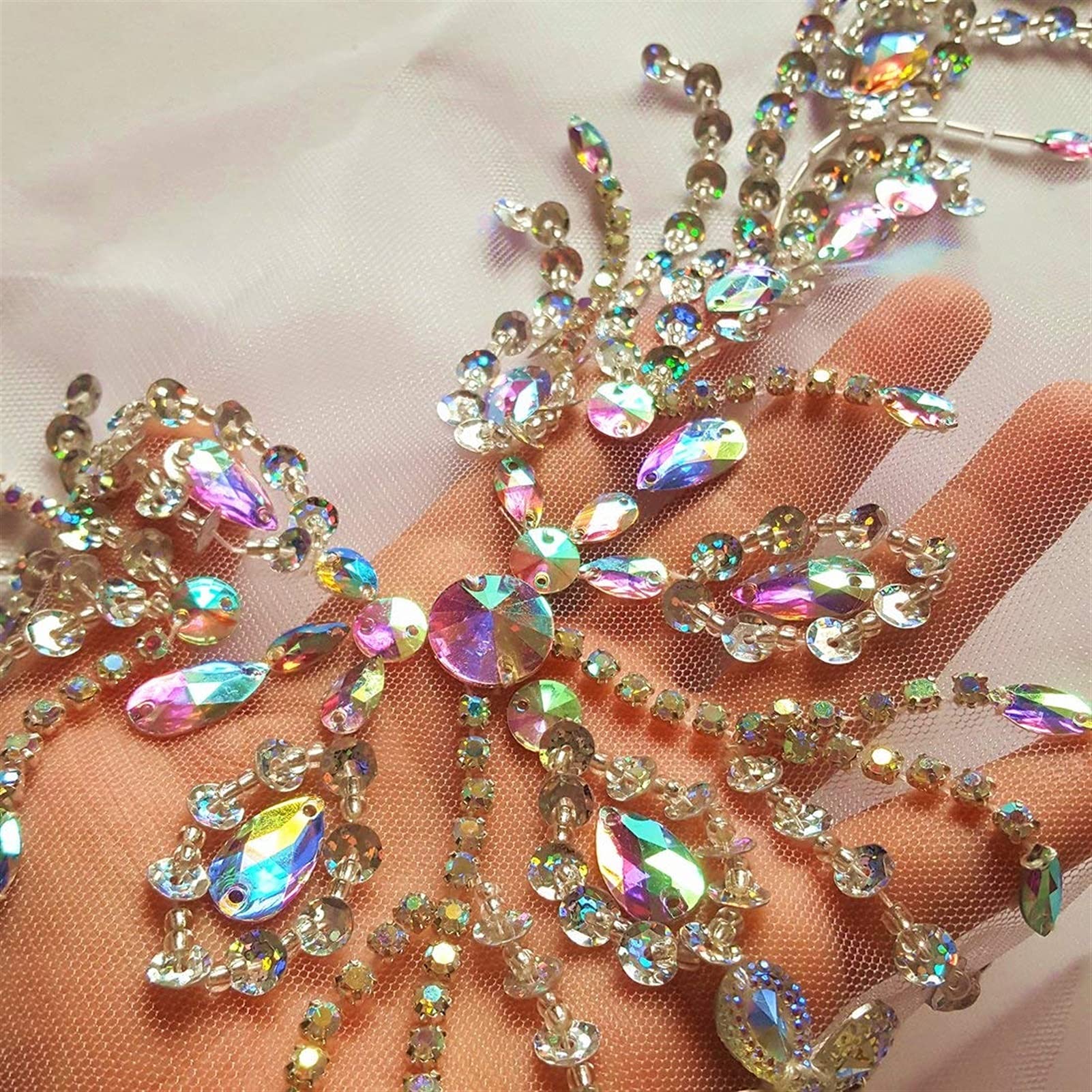
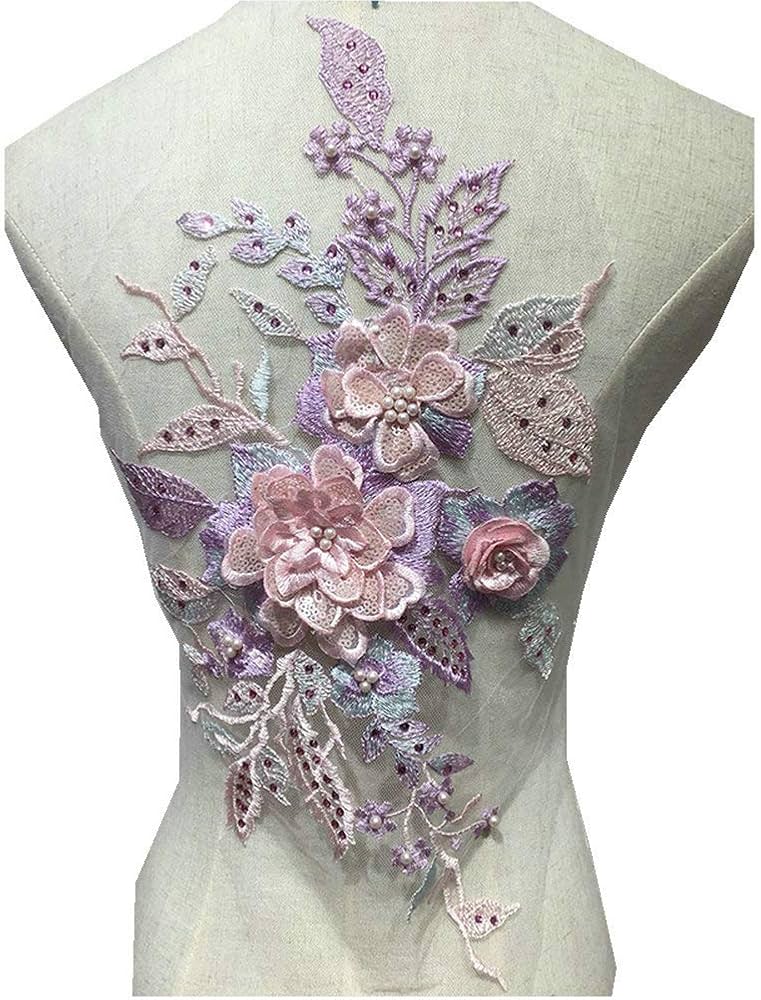
Rhinestone appliques are ready-made decorative pieces that include rhinestones fixed to a backing fabric like mesh, tulle, organza, or felt. They come as motifs (flowers, vines, lines, badges) or larger panels that can be applied to garments and accessories.
Sequin appliques are similar, but they use sequins—small shiny discs—sometimes mixed with beads and embroidery thread to create texture and sparkle.
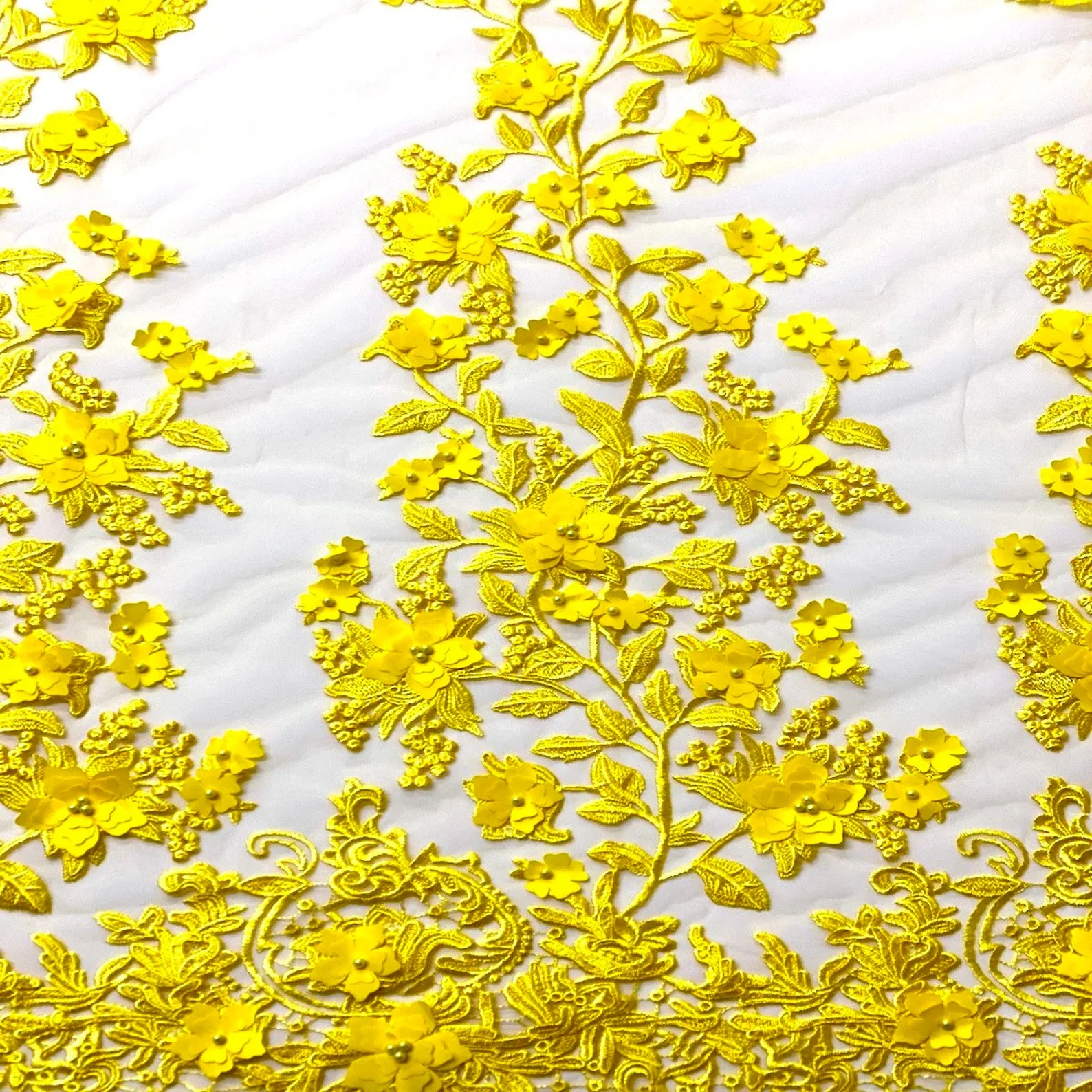
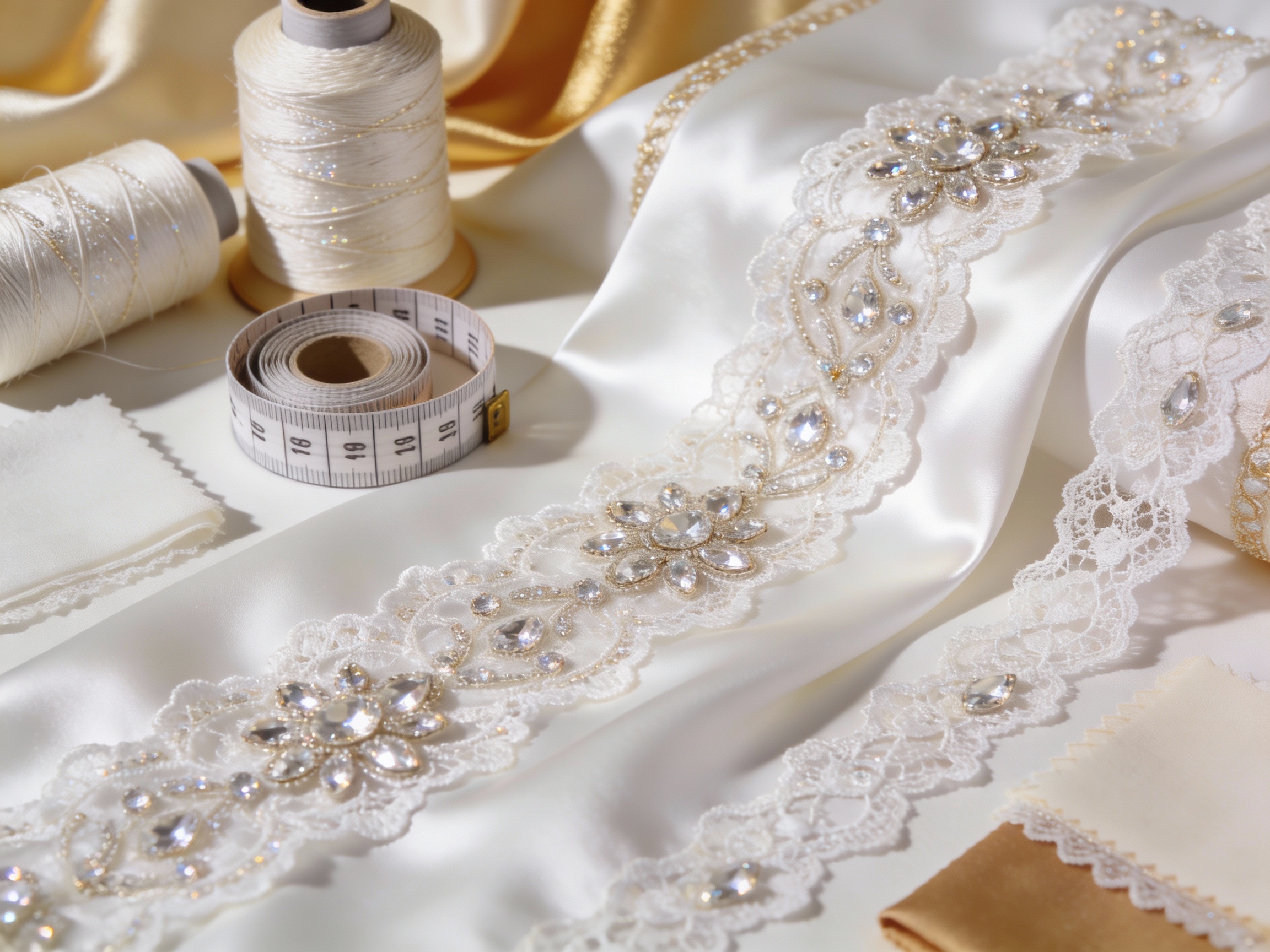
Lace border design is the use of lace trims along edges. Think hems, necklines, sleeve ends, veils, dupattas, scarves, and even cushions or table linens. A lace border works like a frame: it defines an edge, adds detail where the eye naturally goes, and can make a plain base fabric look finished.
These trims matter because modern fashion has two competing goals:
-
create pieces that look special, and
-
produce them on time, at a cost that makes sense.
Appliques and lace borders sit right in the middle—they can add detail without forcing you to build every effect from scratch.
Problem: Decoration is slow, inconsistent, and hard to scale
If you design, sew, or manufacture garments, you’ve likely faced at least one of these issues:
1) “It looked great on the sample, but production is messy.”
A decorated sample often gets extra attention: more time, more careful hands, and more re-checks. Then production begins and reality hits—different operators, different speeds, different fabric batches, and small alignment mistakes that become obvious when the garment is worn.
2) Rework becomes a hidden cost
Embroidery and surface decoration can fail in small but costly ways: a motif shifts, thread breaks, sequins sit unevenly, or a trim is missed. In one industry study on garment defects, “missed trim” was reported as a major cause of issues and rework, taking a large share of recorded defects in that setting (reported as 45% in that study). Even if your numbers are different, the pattern is familiar: small decoration errors create big schedule problems.
3) Skilled labor is not always available
Sequin work, beading, and neat edging need trained hands. A 2025 study focused on boutique partywear production described how combining machine embroidery with manual sequin work can produce strong results, but it also increases time and cost, and depends heavily on skilled craft workers. That’s a common challenge for small studios and mid-size factories alike.
4) Edges are the hardest part to make look clean
Borders look simple until you stitch them. Curves, corners, and soft fabrics can make lace borders wave, pucker, or curl. If the edge finish fails, the whole garment can look “unfinished,” no matter how good the main fabric is.
Agitate: These issues don’t just hurt the garment—they hurt the whole business
Decoration problems rarely stay contained. They spread into everything else:
Delays stack up
If a decorated order needs rework, you lose time twice—once making it, then again fixing it. Even a small correction can cause a chain reaction: ironing queues, QC backlogs, packaging delays, and missed shipping windows.
Quality checks become harder
Basic stitching issues can be spotted quickly. Decoration issues are tougher: loose stones might only show up after flexing the fabric; sequins may snag; lace might lift after pressing. That means more inspection steps and more handling.
Customer trust drops faster than you expect
People forgive small fit issues more easily than they forgive visible decoration flaws. A missing stone, scratchy patch, or peeling edge feels like poor quality. And poor quality is remembered.
Your design choices become limited
When decoration becomes risky, design teams often simplify. That can reduce uniqueness and make collections look similar to competitors.
There’s also a truth the fashion world knows well: heavy sparkle often equals heavy labor. High-fashion examples have shown outfits using tens of thousands of stones, set by hand, to reach a perfect look. That’s impressive—but for most businesses, it’s not realistic for every piece. You need methods that look good without demanding extreme hours per garment.
Solution: Use appliques and lace borders as practical building blocks
The most realistic way to manage decoration is to treat it like a controlled system, not a one-off art piece. Rhinestone/sequin appliques and lace borders can help because they are repeatable and easier to standardize.
Why appliques work as a solution
Appliques are “pre-built” decoration units. Instead of creating the motif from zero on every garment, you attach the same motif again and again.
This helps with:
-
Consistency: same shape, same density, same look across sizes and batches
-
Speed: fewer steps than building the full motif using stitches or hand-set stones
-
Training: operators need skill, but the work is more teachable than full hand embellishment
-
Placement control: templates and placement guides make results more repeatable
Why lace border design works as a solution
Borders solve a different problem: they finish edges quickly and cleanly.
A good lace border:
-
frames the garment and gives it structure
-
adds detail at high-visibility zones (hem, neckline, sleeves)
-
can reduce the need for heavy hems on light fabrics
-
allows you to upgrade a base material without changing the main pattern
Think of it this way: the applique is the “hero detail,” and the lace border is the “clean finish” that makes the whole piece look planned.
Features and Benefits (quality, durability, use cases, customization)
1) Quality depends on construction and backing
A strong applique is not just shiny. Look for:
-
tight stitching around edges
-
even spacing of stones or sequins
-
a backing that suits the garment (soft mesh for comfort, firmer mesh for shape)
-
no sharp edges or exposed rough glue
For lace borders, quality often shows up in:
-
clean scallops or clean straight edges
-
stable width (not stretching unevenly)
-
consistent pattern repeats (important for long hems)
2) Durability depends on how it is applied
Durability is not only about the trim—it’s about the method.
Common methods include:
-
Sew-on appliques: strongest for movement and long wear
-
Hotfix rhinestones: heat-activated glue; can be durable when applied correctly
-
Fabric glue: quick, but quality depends heavily on glue type and curing
-
Fusing: works for some bases, but not ideal for delicate lace
In manufacturer guidance for hotfix stones, correct application is key, and some guides state that properly applied stones can handle warm washing (some claim up to 60°C) and even dry cleaning under suitable conditions. The practical takeaway: hotfix can be durable, but only with correct time, temperature, and pressure.
3) Best use cases
Appliques and lace borders are widely used in:
-
bridal wear (veils, gowns, waist accents)
-
eveningwear and partywear (necklines, side panels, shoulder motifs)
-
dance and performance costumes (sparkle reads well on stage)
-
accessories (bags, belts, hair pieces)
-
ethnicwear (dupattas, lehengas, blouses, kaftans)
-
home textiles (table runners, cushion edges, curtains)
4) Customization options that don’t break production
You can create variety without redesigning the whole garment by changing:
-
placement (center, side, scattered, symmetrical)
-
scale (one large motif vs several small motifs)
-
layering (lace border plus small crystal accents)
-
color direction (tone-on-tone vs contrast)
-
density (light sparkle for daywear, heavier sparkle for occasion wear)
This is where trims shine as a business tool: they help you build multiple looks using the same base pattern.
Real-World Examples / Case Study Insights
Example 1: Boutique partywear production lessons
A 2025 boutique-focused study described a common approach: using machine embroidery for the base design and manual sequin work for shine and texture. The results can be durable and visually strong, but time and cost rise, and the process depends on skilled workers. In real life, many studios handle this by mixing techniques—using appliques to reduce the amount of manual work while still keeping a hand-finished feel.
Example 2: Bridal finishing with lace borders
In bridal and occasion wear, lace borders are often the finishing “signature.” Veils, for example, rely heavily on border design to frame the face and edges. Many makers use lace borders because they add detail without adding weight, and because they photograph well.
Example 3: Crystal embellishment as a long-term fashion practice
Crystal decoration is not a short trend. Industry collaborations and designer programs built around crystal use have existed for decades, showing that the demand for sparkle and surface detail is steady. For practical production, appliques help turn that demand into a repeatable method.
FAQs
1) Should I sew appliques or glue them?
If the garment will be worn often or stretched (dancewear, fitted bodices), sew-on is usually safer. Glue can work for occasional wear, but it depends on glue quality, fabric type, and curing time.
2) Can I wash garments with rhinestones, sequins, and lace?
Often yes, but treat them gently:
-
turn inside out
-
use a mild cycle or hand wash
-
avoid harsh scrubbing
-
air dry when possible
Always follow the care label first.
3) How do I prevent lace borders from puckering?
-
don’t stretch the lace while stitching
-
choose lace with the right stability for the edge
-
use small test pieces to check how it behaves on curves
-
press carefully (too much steam can distort some laces)
4) Do sequins snag easily?
They can, especially on loose weaves or if sequins have sharp edges. For everyday wear, choose flatter sequins, secure stitching, and avoid placing sequins where bags or jewelry rub.
5) How do I source consistent appliques and lace trims?
Ask suppliers for:
-
consistent width and repeat information (for lace)
-
backing details (mesh type, stiffness)
-
washing and care guidance
-
batch consistency (color and shine can vary by lot)
Conclusion
Rhinestone and sequin appliques, paired with lace border design, offer a practical way to add strong visual detail without making production slow and risky. They help reduce common decoration problems like inconsistency, rework, and skill shortages by giving you repeatable, controlled design elements. When you choose quality trims, apply them with the right method, and plan placement carefully, you get decoration that looks good, wears well, and fits real-world timelines.
If you’re building garments for clients, a collection for sale, or even custom pieces, try working with appliques and lace borders like building blocks: test, standardize, then scale.