Introduction: Lace Border Design & Cording Embroidery
When you think of timeless, elegant details in fashion and textiles, lace borders and corded embroidery likely come to mind. These techniques have been used for centuries to elevate everyday garments, home décor, and even ceremonial pieces. They add a touch of texture, sophistication, and artistry to any creation.
In today’s fashion world, these techniques aren’t just for bridal gowns or vintage dresses. They’re found on casual wear, upholstery, and even accessories. Lace borders and corded embroidery may seem intricate, but their impact on the overall design is undeniable. In this post, we’ll explore what these techniques are, how they’re used, and why they’re still so important in modern design.
Features: Key Characteristics of Lace Borders & Cording Embroidery
Let’s dive deeper into what makes lace borders and corded embroidery stand out. Understanding their features will help you see why they’re so valued in both fashion and textile design.
Lace Border Design
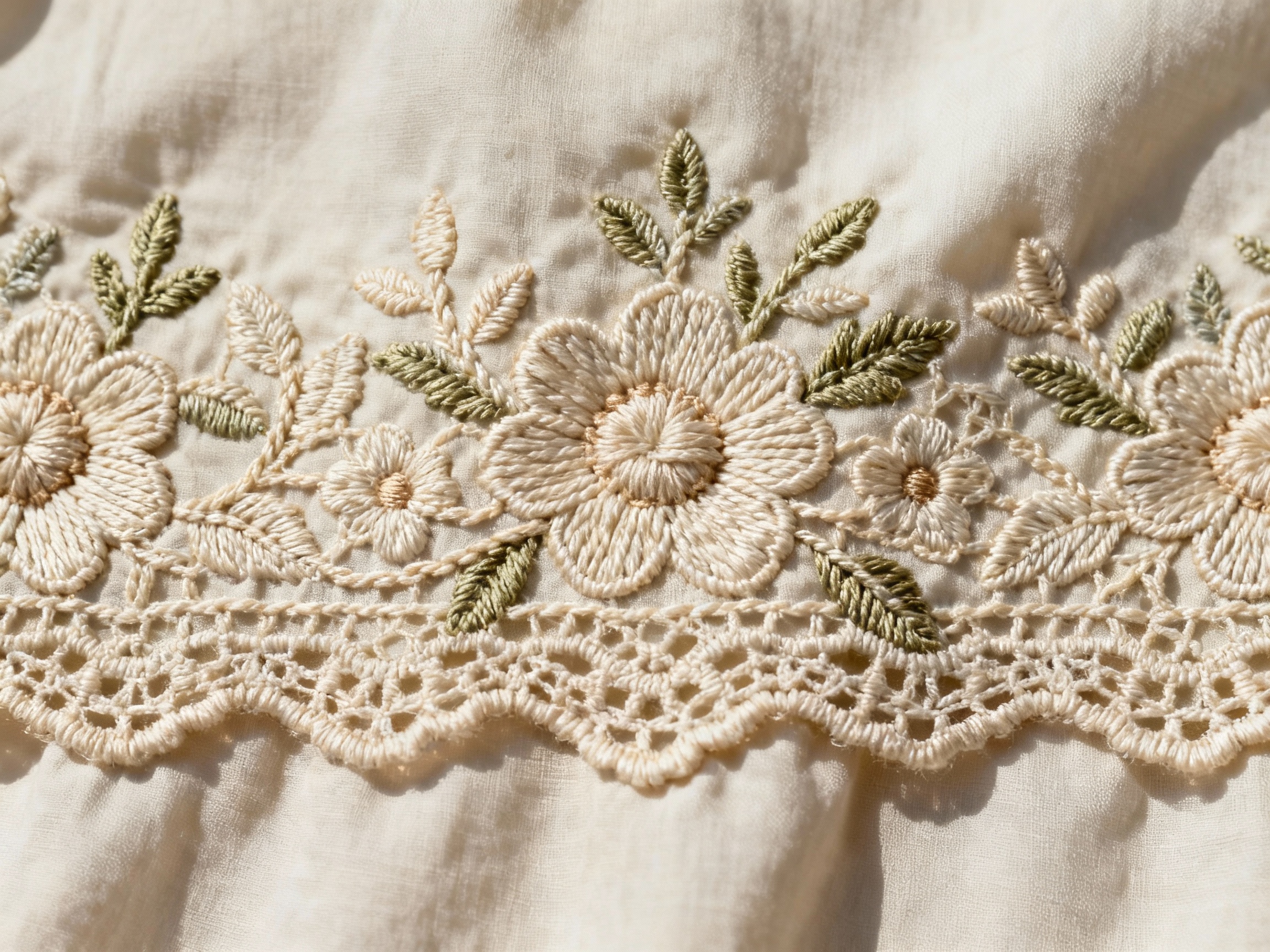
A lace border is a delicate edging made from lace fabric that’s typically attached to garments or other textiles for decoration. Lace has a long history, dating back to the 15th century, and continues to be used for its intricate patterns and lightweight nature.
-
Intricate Patterns: Lace borders come in a wide range of patterns, from floral designs to geometric shapes. These patterns are typically created using threadwork and can be made with various materials like cotton, silk, or synthetic fibers.
-
Sheer & Lightweight: Lace is often chosen for its transparent or semi-transparent qualities. This lightness adds texture to garments without overwhelming the design. It’s especially popular in bridal wear and evening gowns, where soft, romantic aesthetics are key.
-
Versatility: Lace borders can be sewn onto fabrics like cotton, silk, or wool. They are used to decorate hems, cuffs, collars, or even entire garments. You’ll often find lace borders on curtains, bed linens, and tablecloths as well, enhancing home décor with a vintage or romantic touch.
-
Delicate Yet Durable: Lace is surprisingly strong despite its delicate appearance. Depending on the type of lace used, it can be quite durable and withstand regular washing, especially if it's machine-made lace. Handmade lace, while equally beautiful, may require more care.
Corded Embroidery
Corded embroidery is a technique where cords (usually made from threads like silk or rayon) are stitched onto a fabric to create raised designs. This technique adds texture and dimension to otherwise flat fabrics.
-
Textural Contrast: The use of cords in embroidery creates a raised effect, which is quite different from traditional flat embroidery. The raised elements make the design stand out, giving it a 3D look and feel.
-
Variety of Cords: Different types of cords can be used, including twisted, braided, or knotted cords. The choice of cord can drastically change the overall look of the embroidery. Fine cords can give a delicate, intricate finish, while thicker cords add a bolder, more pronounced effect.
-
Popular in High-End Fashion: Corded embroidery is often seen in luxury fashion and accessories. Designers use this technique to create elaborate, eye-catching designs on garments, from evening gowns to outerwear, elevating them to works of art.
-
Used for Accent Detailing: While full garments can be embroidered with cords, this technique is also used in accent details. Think of a beautifully corded neckline, a pair of embroidered cuffs, or an intricate pattern on the hem of a dress.
FAQs About Lace Borders & Corded Embroidery
1. What is the difference between lace borders and regular lace fabric?
Lace fabric is typically a full piece of lace that can be used for making garments or home décor items. Lace borders, on the other hand, are narrow strips of lace used specifically as decorative edges on fabrics, garments, or other textiles. Lace borders are designed to be sewn along hems, cuffs, or collars to add a detailed finishing touch.
2. How do you care for lace borders and corded embroidery?
Lace borders and corded embroidery require special care to maintain their quality. For lace, hand washing or using a delicate cycle on the machine is recommended, and it should be air-dried to avoid damaging the delicate fibers. Corded embroidery, especially if made from silk or fine threads, should also be washed gently and never scrubbed. Always check care instructions for specific pieces to ensure they last.
3. Can corded embroidery be done by hand?
Yes, corded embroidery can be done by hand. In fact, hand-embroidered corded designs are often considered more intricate and valuable because they require a high level of skill and attention to detail. However, this technique is also widely used in machine embroidery, especially for mass production in fashion and home textiles.
4. Are lace borders and corded embroidery expensive?
The cost of lace borders and corded embroidery can vary. Handmade lace and intricate corded embroidery are usually more expensive due to the labor-intensive processes involved. Machine-made versions, while less costly, still require skilled craftsmanship. The price will also depend on the material used, such as fine silk or synthetic fibers.
5. How can I incorporate lace borders and corded embroidery into my designs?
Lace borders can be added to any garment or textile item that requires an elegant touch. Try adding them to the hems of dresses, skirts, or tops, or even as accents on pillows, table runners, or curtains. Corded embroidery can be used for more elaborate designs, whether as accent stitching or full garment embellishment.
Real-World Examples of Lace Borders & Corded Embroidery
1. Lace Borders in Bridal Wear
One of the most iconic uses of lace borders is in bridal fashion. Wedding gowns often feature lace borders along the edges of sleeves, hems, or veils. A great example of this is the famous lace border used in Princess Diana’s wedding dress. The dress featured intricate lace borders that were hand-stitched with a design that included floral motifs. This timeless look has inspired many brides to incorporate lace borders in their own wedding gowns.
The delicate appearance of lace adds a romantic and classic touch, which is why it’s always a top choice for bridal fashion. Today, lace borders are used in a variety of bridal accessories, such as veils and headbands, further enhancing the overall wedding look.
2. Corded Embroidery in High-Fashion Garments
Corded embroidery has been a staple in high-fashion design for decades. In the 1950s, couturiers like Christian Dior and Yves Saint Laurent used corded embroidery to create intricate, textured designs on evening gowns and jackets. More recently, designers like Valentino and Oscar de la Renta have continued to use this technique in their collections, often incorporating it into luxurious evening wear.
One notable example is a Valentino haute couture gown that featured stunning corded embroidery in a floral pattern. The use of raised embroidery brought the design to life, giving the gown a sculptural, 3D quality that stood out on the runway.
3. Corded Embroidery in Home Décor
Corded embroidery also has a place in home décor. A popular use of this technique can be found in embroidered cushions and throw pillows. These designs often feature bold, raised patterns that add a touch of luxury to any room. For instance, a corded embroidery pattern in a swirling motif can turn a simple pillow into a statement piece for a living room or bedroom.
Conclusion: Why Lace Borders & Corded Embroidery Still Matter
Lace borders and corded embroidery are more than just design techniques—they’re ways to elevate ordinary textiles into something extraordinary. Whether it's a delicate lace border on a bridal gown or a striking corded pattern on an evening dress, these techniques add depth, texture, and beauty to garments and home décor.
By understanding the features of lace borders and corded embroidery, designers and crafters can incorporate them effectively into their creations. From their historical use in fashion to their contemporary relevance in both clothing and interiors, these techniques remain timeless and highly valued in the world of textile design.